21 November 2026
|11:56 am
|Aanetic Advisory Editorial
Explore Top DPDP Act Services in India, including privacy assessments, data mapping, consent workflows, vendor governance and implementation support.
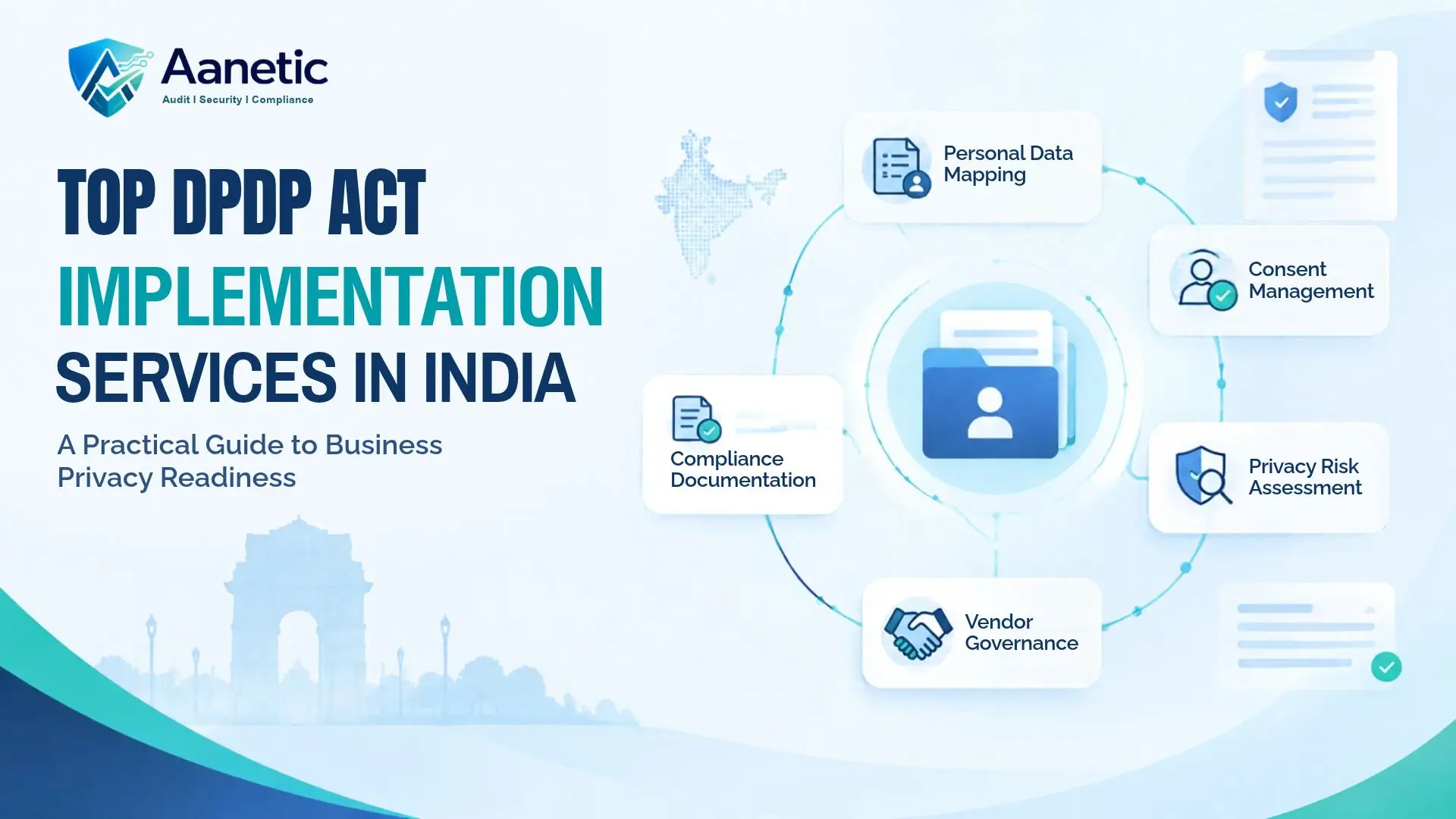
Indian businesses need more than updated privacy policies to prepare for India's data protection framework. They need to understand how personal data moves through their organization, who is responsible for handling it, and which processes require improvement. Top DPDP Act Implementation Services in India should help businesses translate applicable legal requirements into practical privacy operations, supported by appropriate documentation, technology, and internal accountability.
For SaaS companies, fintech organizations, e-commerce platforms and IT service providers, choosing an implementation partner is an important decision. The right support should reflect the organization's actual data practices rather than rely on generic templates. It should also distinguish between legal interpretation, compliance consulting and technical implementation.
Personal data is used across everyday business activities. A company may collect customer details through its website, process employee records in HR software, store user information on a cloud platform, and share selected data with analytics or customer support providers.
These activities create responsibilities across multiple teams. Marketing may manage website forms and tracking technologies; HR may maintain employee information; IT may control access to databases; and procurement may manage vendor relationships. Without coordination, the organization can struggle to establish a consistent view of its privacy practices.
Professional DPDP implementation support helps connect these activities. Instead of treating privacy as a document-writing exercise, businesses can establish clearer responsibilities, review their processes, and identify the operational changes required to comply with the applicable provisions.
DPDP Act implementation services help organizations assess their current privacy practices and develop processes aligned with applicable requirements under the Digital Personal Data Protection Act, 2023 and the Digital Personal Data Protection Rules, 2025.
A structured engagement may include a readiness assessment, personal data discovery, processing records, privacy notice review, consent workflow assessment, Data Principal rights procedures, vendor governance, security safeguards and breach response planning.
The scope should be based on the organization's role and activities. Under the Act, a Data Fiduciary determines the purpose and means of processing personal data, while a Data Processor processes it on the Data Fiduciary's behalf. A Data Principal is the individual to whom the personal data relates. These roles influence how responsibilities should be assessed and documented.
Importantly, readiness, implementation and ongoing compliance are different activities. A readiness assessment identifies gaps; implementation addresses them; ongoing compliance involves operating, reviewing and updating the processes as the business changes.
When comparing a DPDP implementation partner, businesses should look beyond the number of policies or templates included in a proposal. The provider should be able to understand the organization's technology environment, business processes, data flows, and existing privacy arrangements.
A useful engagement begins with discovery. The provider should ask how information is collected, why it is used, where it is stored, which teams can access it, and whether it is shared with external parties. This understanding helps make recommendations relevant to the organization.
Evaluate whether the provider offers a defined methodology, clear deliverables, practical remediation guidance and communication with relevant internal teams. Ask how findings will be prioritized, who is expected to implement changes, how progress will be reviewed, and what support is available after the initial project.
DPDP Act Implementation Services should be judged by the quality and relevance of their work, not by unsupported claims of being number one or promises of guaranteed compliance.
A readiness assessment reviews existing privacy practices against the organization's relevant requirements. It may examine privacy notices, data collection methods, access arrangements, vendor relationships, security procedures and internal responsibilities.
The expected output is a gap report that identifies areas requiring attention, explains their business relevance and recommends priorities. This gives management a practical starting point rather than an unstructured list of legal provisions.
Data mapping identifies what personal data the organization handles, where it enters the business, which systems store it, why it is processed and which third parties receive it.
For example, an e-commerce company may collect customer names and contact details through its website, payment-related information through a payment provider, and delivery details through a logistics partner. Mapping these flows helps teams understand their processing environment and identify missing ownership or documentation.
A provider can review whether privacy notices explain the relevant processing purposes clearly and whether consent-related workflows are appropriate for the organization's activities. This may involve reviewing website forms, mobile application interfaces, preference settings and withdrawal processes.
Consent should not be treated as a universal answer to every processing activity. The applicable legal basis and requirements must be assessed for each purpose under the relevant provisions.
Businesses should plan how requests from individuals will be received, verified, assigned and handled. A defined workflow can clarify which team reviews a request, where relevant information is located and how the response is documented.
The implementation output may include request-handling procedures, responsibility assignments, verification steps and escalation arrangements, subject to the provisions and timelines applicable when the relevant obligations commence.
A review of retention practices can identify where personal data is stored, who owns deletion decisions and how retention requirements are applied across business systems. The organization should consider relevant legal retention needs before defining deletion procedures.
Security and breach response work may include reviewing access controls, monitoring, incident escalation, investigation records and communication responsibilities. The aim is to connect privacy processes with the organization's existing security operations.
External service providers may handle personal data through hosting, payroll, analytics, customer support or software platforms. Vendor governance should identify relevant relationships, assess risks, review contractual responsibilities and establish appropriate oversight.
Documentation support may also cover internal privacy policies, operating procedures, role assignments, employee awareness material and records of implementation decisions.
A Practical Roadmap for DPDP Implementation: Top DPDP Act Implementation Services in India should provide a roadmap that links assessment findings to measurable actions. A typical engagement can follow these stages:
Understand the business: Review services, departments, systems, data uses and relevant organizational roles.
Discover personal data: Identify collection points, storage locations, processing purposes and external recipients.
Assess gaps: Compare current practices with applicable legal requirements and record areas requiring improvement.
Review privacy communication: Examine notices, consent interfaces and relevant user-facing processes.
Build operational workflows: Establish procedures for rights requests, retention, erasure, incidents and vendor oversight.
Assign ownership: Confirm responsibilities across privacy, legal, security, HR, marketing and technology teams.
Validate implementation: Review whether agreed changes have been completed and whether supporting records reflect actual practices.
Maintain the program: Establish periodic reviews so processes can adapt to new systems, vendors and business activities.
The time and resources required will depend on the organization's size, data environment, existing controls and applicable obligations. A provider should establish realistic milestones after understanding the scope.
Businesses comparing DPDP compliance consulting providers should request a written proposal that explains the work rather than relying on broad service descriptions. Compare providers on their understanding of Indian privacy requirements, assessment approach, technical knowledge, documentation quality, and ability to work with internal teams.
Also examine the practical details: What will the organization receive at the end of each phase? Are workshops and remediation reviews included? Which tasks remain with the business? How will confidential information be handled? Is software included, optional or separately priced? What ongoing support is available?
Top DPDP Act Implementation Services should offer a transparent scope, clear responsibilities, and recommendations that align with the organization's actual operating environment. Avoid selecting a provider solely because it advertises a low price or makes claims that cannot be independently verified.
SaaS companies may need to review customer account data, product analytics, and cloud infrastructure. Fintech businesses may have complex data flows across applications, partners and transaction-related systems. E-commerce platforms often coordinate information across customers, payment providers, delivery partners and marketing tools.
Healthcare technology providers, education platforms, IT service companies and digital marketing organizations may also process personal data through their services and internal operations. However, applicability and specific responsibilities must be assessed in accordance with the Act, Rules, exemptions, and each organization's role. Not every business has identical obligations, and additional requirements may apply to an organization notified as a Significant Data Fiduciary.
Aanetic publishes data privacy services covering areas such as data mapping, Records of Processing Activities (RoPA), consent, individual rights workflows, DPIAs, vendor governance and breach response. Its technology portfolio also includes tools for consent management, cookie consent, personal data discovery, privacy operations, DPIA workflows, RoPA and third-party risk management. These solutions can support different parts of a privacy program, depending on the organization's requirements.
For example, a PII Scanner can support personal data discovery, while RoPA software can help organize processing records. Consent and cookie management tools can support relevant workflows for websites and applications. DPIA and TPRM solutions can assist with privacy risk assessment and vendor oversight. Tools should be selected according to actual requirements; purchasing software alone does not establish compliance.
The statutory Consent Manager role also requires care. Under the Rules, a Consent Manager is an entity registered with the Data Protection Board of India. A general consent management platform should not be described as a registered statutory Consent Manager unless its registration is verified.
The Digital Personal Data Protection Act, 2023 and the Digital Personal Data Protection Rules, 2025 have phased commencement provisions. As of 21 November 2026, the Consent Manager registration framework under Rule 4 has taken effect, with the registration portal announced by MeitY on 14 November 2026. The main provisions covering Data Fiduciary obligations and most substantive Rules are scheduled to commence 18 months after publication of the notifications, on 13 May 2027. Businesses should therefore distinguish between provisions already in force and those scheduled for a later date when planning implementation.
The roadmap should be reviewed against the latest Gazette notifications and official guidance before publication or use as legal advice. Implementation consulting can support operational preparation, but appropriately qualified legal professionals should review legal questions specific to a particular organization.
Ready to start your DPDP implementation journey? Contact Aanetic today
DPDP Act implementation services help organizations assess their privacy practices and prepare processes for applicable data protection requirements. They may include data mapping, gap assessment, privacy notice review, consent workflows, rights request procedures, vendor governance, security reviews and documentation support.
Need enterprise guidance on PCI DSS, SOC 2, or RBI compliance frameworks?
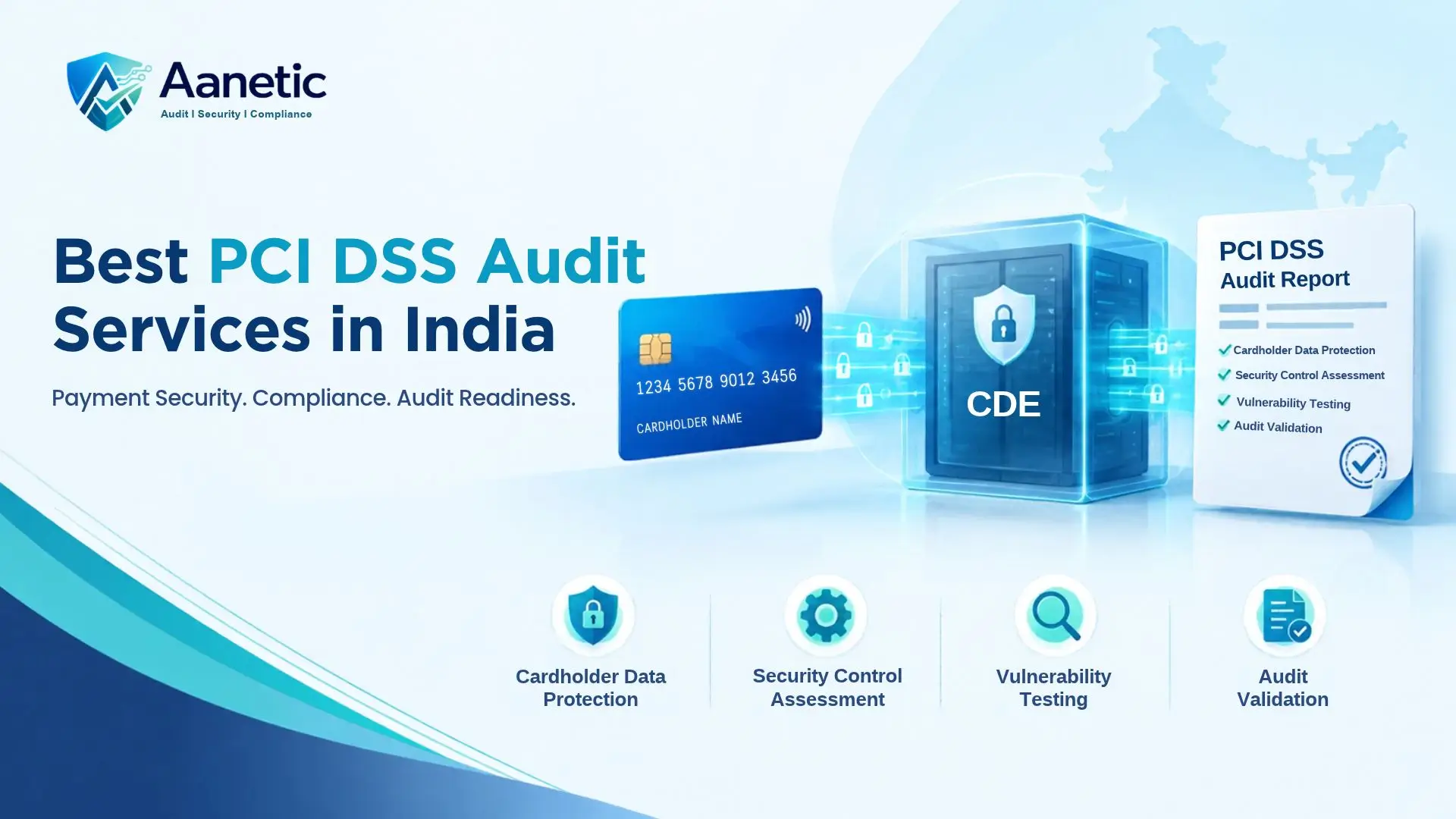
Explore the Best PCI DSS Audit Services in India for payment security assessments, compliance gap analysis, remediation support and audit readiness.
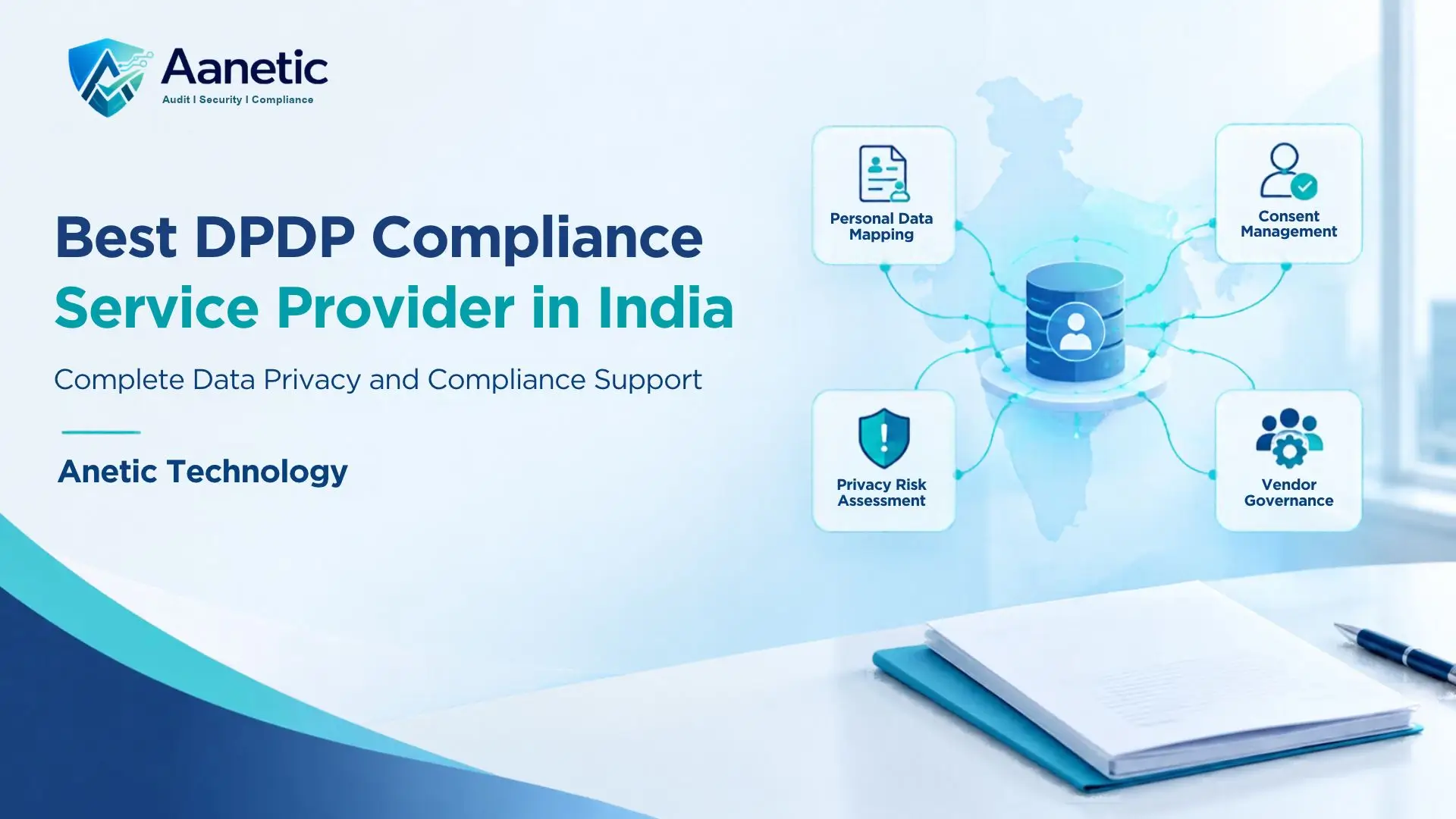
Find the Best DPDP Compliance Service Provider in India for privacy assessments, data mapping, consent management, vendor governance and DPDP readiness.
Use this SOC 2 compliance checklist for SaaS startups to identify gaps, implement security controls, organize audit evidence and prepare for a CPA audit.