21 November 2026
|12:17 pm
|Aanetic Advisory Editorial
Find the Best DPDP Compliance Service Provider in India for privacy assessments, data mapping, consent management, vendor governance and DPDP readiness.
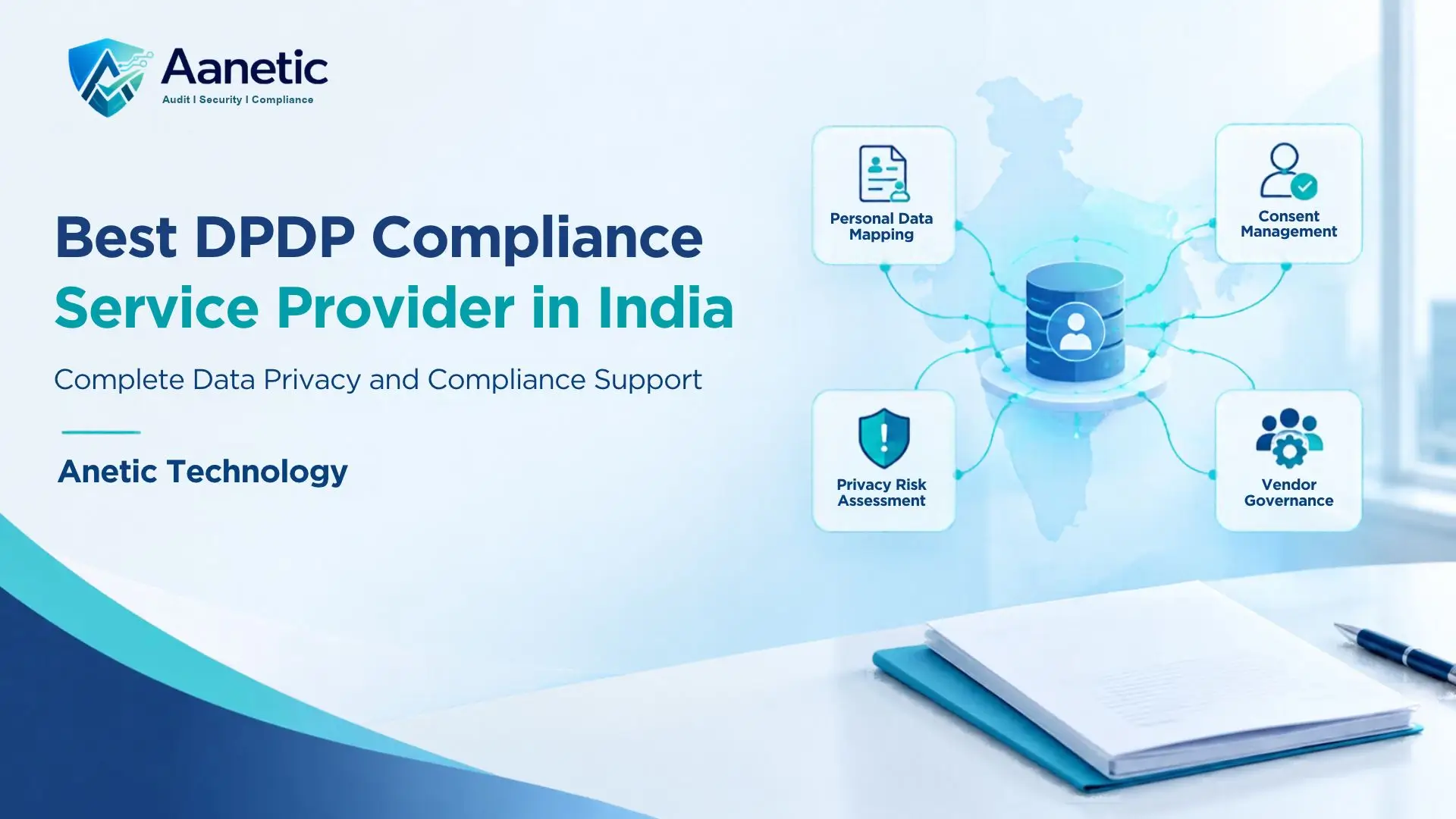
Choosing the Best DPDP Compliance Service Provider in India means finding a partner that can help your organization understand its data protection responsibilities and translate them into workable business processes. The right support should go beyond policy templates. It should help identify personal data, review how it is used, assess privacy gaps and establish suitable processes across teams, systems and vendors.
For startups, SaaS businesses, fintech companies and enterprises, this requires a combination of privacy knowledge, operational understanding and appropriate technology. This guide explains what a DPDP service provider should offer, how to evaluate its capabilities and how Aanetic's privacy solutions may support different parts of the implementation journey.
The Digital Personal Data Protection Act, 2023 establishes India's framework for processing digital personal data. The Digital Personal Data Protection Rules, 2025 provide further operational detail. Together, they address matters such as notice, consent, organizational responsibilities, individual rights, security safeguards, and personal data breach procedures.
The Act uses three important terms. A Data Fiduciary determines the purpose and means of processing personal data. A Data Processor processes personal data on behalf of a Data Fiduciary. A Data Principal is the individual to whom the personal data relates.
The commencement schedule is phased. As of 21 November 2026, specified institutional and administrative provisions are already in force, and Rule 4 concerning Consent Manager registration has commenced on 13 November 2026. Most substantive provisions concerning Data Fiduciary obligations and the corresponding operational Rules are scheduled to commence on 13 May 2027. Businesses should plan against the relevant dates rather than assume every provision is already enforceable.
Personal data rarely stays within one department. Customer information may be entered through websites and mobile applications, employee records may reside in HR systems, and service providers may process information through cloud hosting, payment, analytics, or customer support platforms.
This makes privacy management an operational responsibility. A business may have a privacy policy but still lack a reliable inventory of its data, clear retention practices or a defined process for handling requests from individuals. Vendor contracts may also fail to explain how personal data should be protected and managed.
Professional DPDP compliance services help organizations examine these connected activities. The objective is to identify gaps, clarify ownership and prepare processes that reflect how the business actually operates.
A DPDP compliance service provider helps an organization assess, organize and improve its privacy practices. The engagement may begin with a gap assessment and data discovery, followed by reviews of privacy notices, consent workflows, retention arrangements, vendor relationships and security procedures.
The provider may also help document processing activities, establish Data Principal request-handling workflows, review incident response arrangements and support privacy risk assessments. The exact scope depends on the organization's role, size, processing activities, technology environment and applicable legal requirements.
A useful provider distinguishes between identifying a problem and helping the business address it. For example, a data mapping exercise should not end with a spreadsheet alone; it should help teams understand which systems and vendors are involved, who owns each activity and where further review is needed.
The Best DPDP Compliance Service Provider in India for one organization may not be the right choice for another. A startup with a small cloud-based product may need help identifying data flows and reviewing consent interfaces. A large enterprise may need coordinated privacy governance across multiple departments, business units and processors.
Start by assessing the provider's understanding of the DPDP Act and Rules. Ask how it determines which requirements apply to your organization and how it accounts for phased commencement. A provider should be able to explain its approach in clear business terms rather than relying only on legal terminology.
Next, review its methodology and deliverables. Ask whether the engagement includes a documented assessment, data inventory, prioritized recommendations, implementation responsibilities and validation. Check whether the provider understands your systems and can work with legal, technology, security, HR and business teams.
Finally, clarify confidentiality arrangements, project milestones, communication, software costs and post-assessment support. Request a written scope of work that explains what the provider will deliver and what your own teams must complete.
Consulting and technology can complement each other. A provider may help define the required processes, while software can support recurring activities and maintain more organized records.
Consent Manager: Helps manage consent-related interactions and records. Check whether a product is simply a consent management platform or an entity registered under the statutory Consent Manager framework. These are not interchangeable descriptions.
Cookie Consent: Helps identify website cookies and trackers and manage relevant visitor preferences.
PII Scanner: Supports discovery and classification of personal data across connected systems, databases and storage locations.
Privacy Suite: Can bring together privacy workflows such as data discovery, processing records, impact assessments, rights requests and incident management.
DPIA Software: Supports structured privacy impact assessments, risk review, approvals and remediation tracking. Specific statutory DPIA duties should be assessed against the organization's status and applicable provisions.
RoPA Software: Helps maintain records of processing activities, including purposes, data categories, systems and relevant third-party relationships.
TPRM Software: Supports vendor assessments, processor oversight, contractual tracking and third-party risk reviews.
Aanetic lists these privacy and compliance tools in its technology portfolio. Their suitability depends on the organization's requirements, configuration and actual use. Software can support a compliance program, but it cannot independently make a business compliant.
Different industries process personal data in different ways. SaaS providers may handle user profiles, account details, product usage and support records. Fintech businesses may process customer onboarding information and data through connected financial service providers. E-commerce companies coordinate customer, payment, delivery and marketing information.
Healthcare platforms may manage appointment and patient-related information, while education technology businesses may process learner, parent and employee data. IT service providers and digital marketing companies may handle client information as part of outsourced services.
The Best DPDP Compliance Service Provider in India should understand these differences and assess the organization's actual role and processing activities. Applicability, exemptions, and additional requirements must be considered rather than assuming every organization follows an identical compliance plan.
A structured DPDP implementation engagement generally follows a sequence, although the work may overlap depending on the organization's maturity and priorities.
Initial consultation: Understand the business model, systems, teams and intended scope.
Gap assessment: Review existing privacy practices and identify areas requiring attention.
Data discovery and mapping: Identify personal data, processing purposes, storage locations and relevant third parties.
Privacy process review: Examine notices, consent-related workflows, retention arrangements and rights-handling procedures.
Risk and vendor review: Assess relevant security practices, processors, contracts and privacy risks.
Remediation planning: Agree on actions, owners, priorities and supporting documentation.
Validation and monitoring: Review completed work and establish a process for keeping arrangements current.
The Best DPDP Compliance Service Provider in India should explain what each stage produces and how progress will be measured. Timelines depend on data volumes, system complexity, existing processes, and the agreed scope. A provider should not promise a universal completion date before understanding these factors.
Aanetic provides data privacy services and technology solutions covering areas such as data mapping, Records of Processing Activities, consent management, privacy impact assessments, rights workflows, vendor governance and breach response. Its approach connects privacy requirements with the systems and processes businesses use to manage information.
Its tools address specific operational needs. The PII Scanner supports personal data discovery, while RoPA software helps organize processing records and data flows. Consent Manager and Cookie Consent solutions support relevant consent and website preference workflows. DPIA software supports privacy risk assessments, and TPRM software helps businesses assess and monitor third-party relationships. The Privacy Suite brings several privacy operations into a connected platform.
For organizations evaluating DPDP Compliance Service Providers in India, Aanetic's combination of privacy-focused services and technology may be relevant when requirements involve both process improvement and workflow support. Businesses should discuss their environment and confirm the exact scope, responsibilities, and deliverables before starting an engagement.
One important distinction concerns statutory Consent Managers. A consent management product is not automatically a registered Consent Manager under the DPDP Act. Businesses should verify registration where they specifically require the statutory service.
Begin by identifying the personal data your organization collects and the business purposes for which it is used. Review the systems, teams and external providers involved in processing that information. Then compare current practices with the provisions and commencement dates relevant to your organization.
Prepare a list of priority gaps and decide whether you need consulting, technical tools, implementation assistance, or a combination of these. The Best DPDP Compliance Service Provider in India should help turn this initial understanding into a realistic plan with defined deliverables and responsibilities. Contact Aanetic
A DPDP compliance service provider helps organizations understand and prepare for their responsibilities under India's Digital Personal Data Protection Act and Rules. Services may include privacy assessments, data mapping, consent workflow reviews, vendor governance, documentation and implementation support.
Need enterprise guidance on PCI DSS, SOC 2, or RBI compliance frameworks?
Explore the Best PCI DSS Audit Services in India for payment security assessments, compliance gap analysis, remediation support and audit readiness.
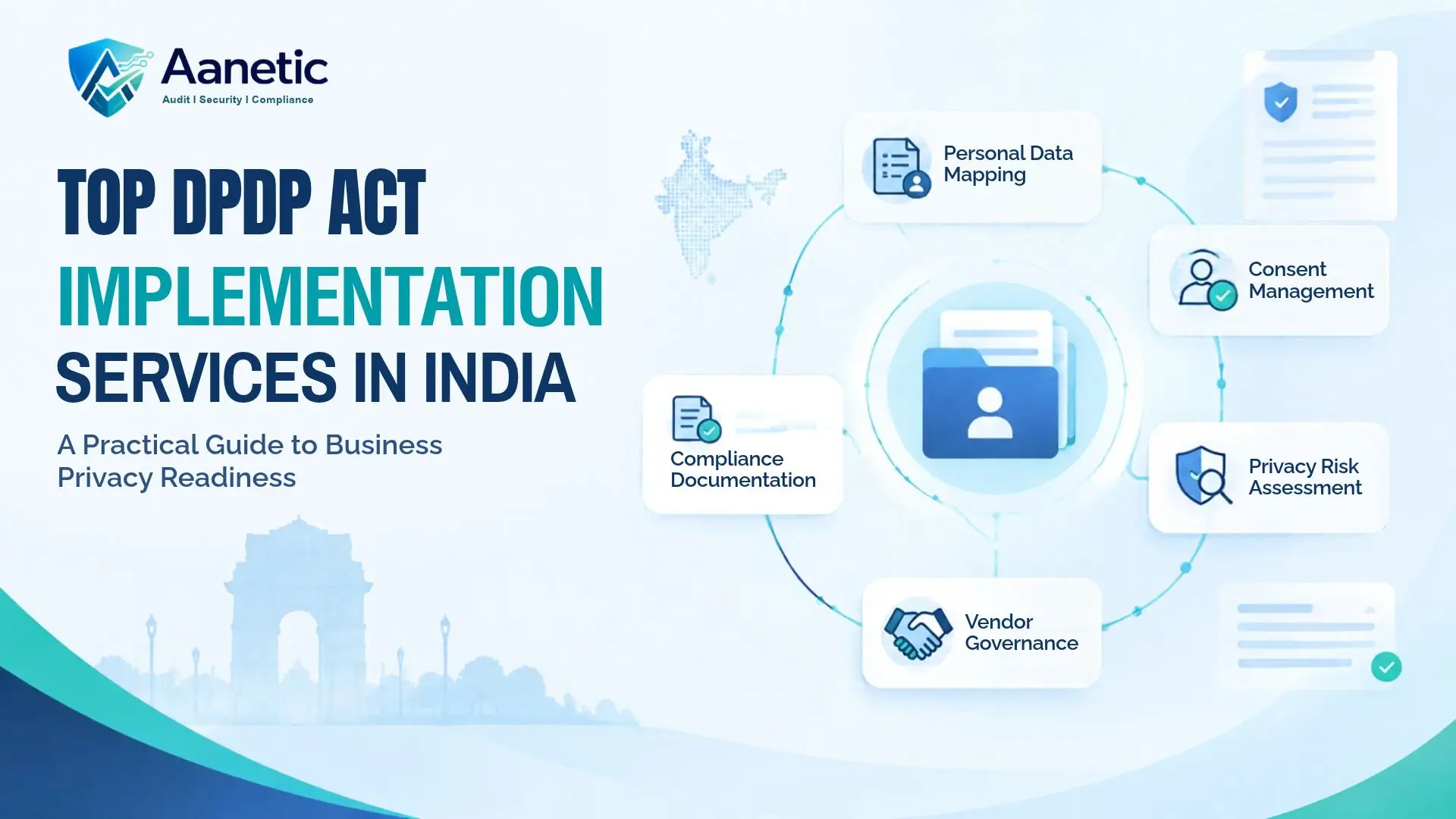
Explore Top DPDP Act Services in India, including privacy assessments, data mapping, consent workflows, vendor governance and implementation support.
Use this SOC 2 compliance checklist for SaaS startups to identify gaps, implement security controls, organize audit evidence and prepare for a CPA audit.