28 October 2026
|5:04 pm
|Aanetic Advisory Editorial
Explore the top SOC 2 audit challenges for Indian startups, from scoping errors to access gaps, and see how Aanetic simplifies the pathway to attestation.
Global enterprise buyers, particularly in North America and Europe, no longer treat cybersecurity compliance as an afterthought. For Indian SaaS startups, cloud software providers, and IT service exporters, obtaining a SOC 2 report has transitioned from a competitive advantage into an absolute prerequisite for closing mid-market and enterprise deals.
Successfully navigating the SOC 2 audit process in India requires clear scoping, thorough gap remediation, and disciplined evidence collection suited to cloud-native architectures. This step-by-step guide breaks down the core compliance frameworks, audit stages, practical benchmarks, and how partnering with Aanetic supports a smooth, audit-ready process from assessment to attestation.
SOC 2 (System and Organization Controls 2) is an attestation standard established by the American Institute of Certified Public Accountants (AICPA). It evaluates how effectively a service organization protects customer data against unauthorized access, disruptions, and breaches based on five Trust Services Criteria (TSC):
Security (Common Criteria): Mandatory across every audit; ensures systems and perimeter defenses resist unauthorized access, vulnerabilities, and data leaks.
Availability: Evaluates system uptime, failover mechanisms, redundancy, and disaster recovery procedures.
Confidentiality: Focuses on safeguarding sensitive corporate data and intellectual property, as well as proprietary access controls.
Processing Integrity: Confirms that cloud systems process transactions accurately, promptly, and without tampering.
Privacy: Governs the collection, storage, and handling of personally identifiable information (PII), aligning closely with data protection frameworks such as India's DPDP Act and the GDPR.
Choosing the right SOC report structure defines your timeline and internal resource allocation:
SOC 2 Type 1: Evaluates the design of controls at a specific point in time. It verifies whether your policies and security architectures are appropriately structured to meet the criteria. Ideal for early-stage Indian SaaS firms needing rapid proof of security to unlock pending sales pipelines.
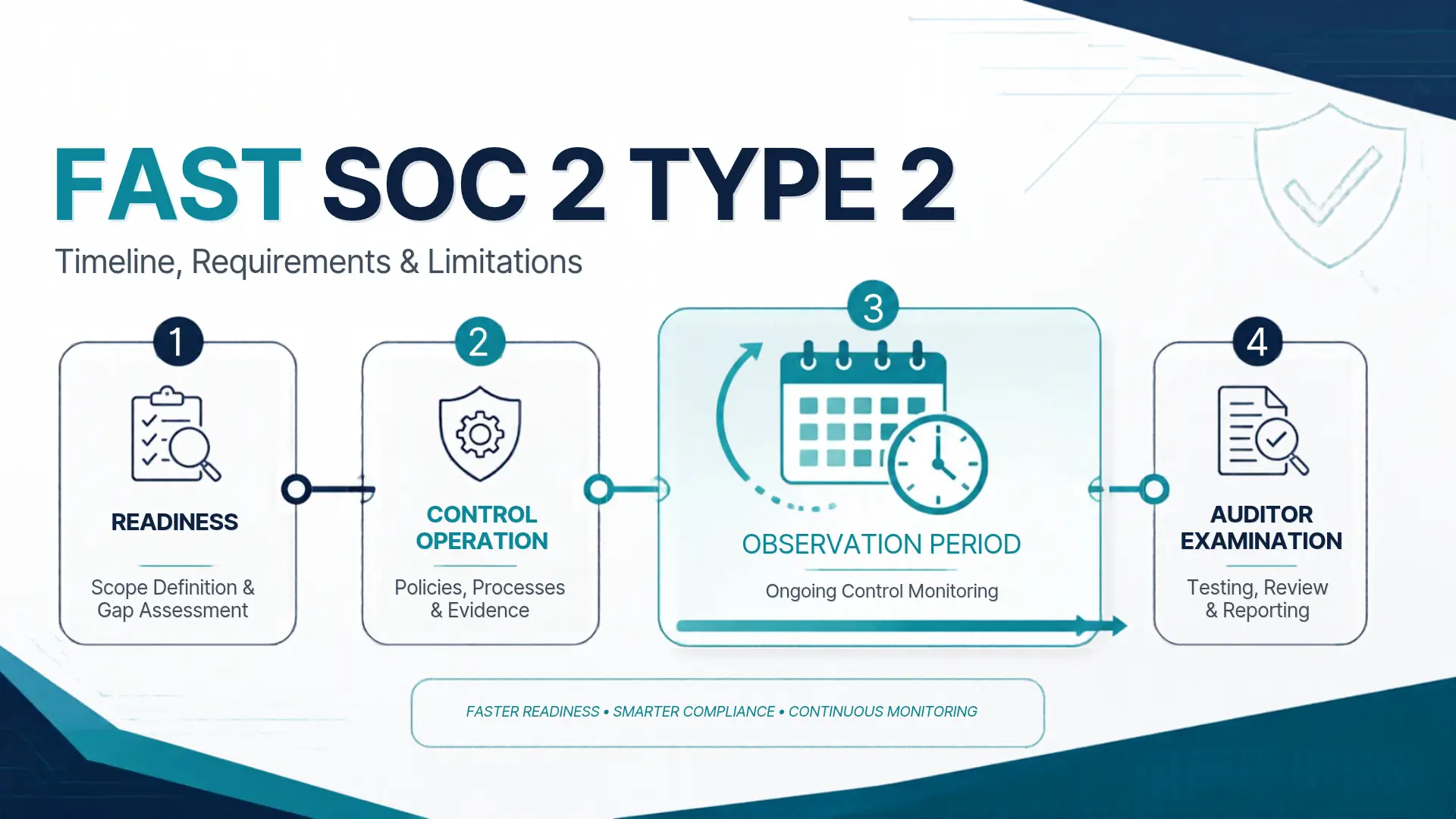
SOC 2 Type 2: Assesses the effectiveness of controls over a period of 3, 6, or 12 months. It verifies
that your engineering, HR, and DevOps teams consistently follow established policies. Type 2 is the industry standard required by enterprise procurement committees.
A systematic audit lifecycle mitigates the risk of qualified findings, control exceptions, or prolonged audit cycles.
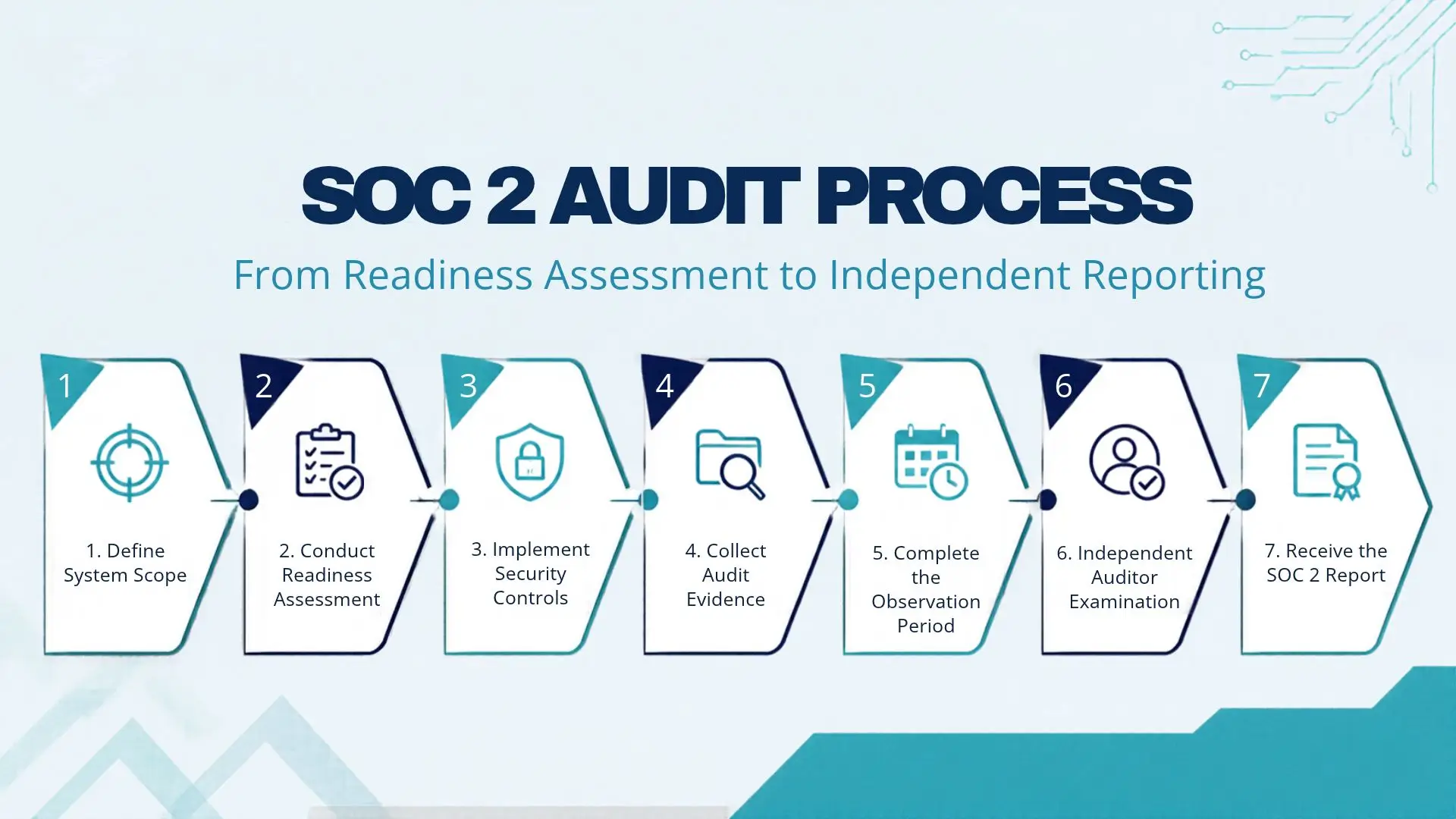
Define the audit scope, including production AWS, GCP, or Azure environments, customer data pipelines, code repositories (such as GitHub or GitLab), and identity providers. Only include necessary Trust Services Criteria. For B2B analytics platforms, starting with Security and Confidentiality or Security and Availability helps control costs and maintain focus.
Before engaging external auditors, perform a comprehensive readiness assessment against AICPA Trust Services Criteria. Identify architectural gaps across:
Missing MFA or role-based access on critical administrative panels.
Unmonitored production cloud storage or unencrypted datastores.
Gaps in change control, static code analysis (SAST), or offboarding workflows.
Develop audit-ready documentation and configure technical safeguards:
Information Security Policies (InfoSec): Access control, incident response plans, acceptable use, and business continuity protocols.
Access & Identity Governance: Zero-trust architecture, automated quarterly access reviews, and single sign-on (SSO).
Vulnerability & Patch Management: Scheduled dynamic/static testing, endpoint management (MDM), and documented service level agreements (SLAs) for patching critical CVEs.
Data Protection: Enforcing TLS 1.3 in transit, AES-256 at rest, and automated backup snapshots with verified recovery points (RPO/RTO).
For a SOC 2 Type 2 report, your company enters the monitoring period (usually 3 to 6 months for initial audits). You must maintain immutable records showing that your controls operated without lapse. Key evidence items include timestamped peer reviews for PR merges, vendor risk assessments, background check confirmations for new joiners, and quarterly access review tickets.
A licensed, independent CPA firm conducts the formal examination. The auditors request sample populations (e.g., sample pull requests, tickets for terminated employees, backup restoration test logs) and conduct structured interviews with technical leads.
The CPA firm prepares the formal SOC 2 Type 1 or Type 2 Attestation Report, containing the auditor's independent opinion, management assertion, detailed system description, and test results. Because SOC 2 reports are valid for 12 months, Indian organizations transition into an annual audit cycle to maintain enterprise customer trust.
Common Challenge | How Startups Struggle | How Aanetic Helps |
Audit Scope | Including unnecessary systems or criteria increases time and effort. | Helps define a practical audit scope based on business needs and customer requirements. |
Change Management | Missing code reviews, approvals, or deployment records create compliance gaps. | Helps establish documented processes for code review, approval, testing, and deployment. |
Access Management | Delayed removal of employee access and manual reviews create security risks. | Helps improve access reviews and employee onboarding and offboarding procedures. |
Evidence Collection | Scattered documents and screenshots make audit preparation difficult. | Helps organize compliance evidence and identify missing records before the audit. |
Audit Preparation | Unclear requirements and incomplete documentation can delay the audit. | Supports audit preparation, remediation tracking, and coordination with the independent auditor. |
Achieving SOC 2 compliance can consume hundreds of engineering hours if managed with manual spreadsheets and fragmented evidence gathering. Aanetic simplifies this entire journey, helping tech organizations navigate audit readiness with precision, clarity, and speed.
Expert-Led Scoping & Gap Analysis: Aanetic works closely with your architecture to establish the right system boundary and Trust Services Criteria, ensuring you don't over-scope or pay for unnecessary audit overhead.
Custom Security Framework Alignment: We translate dry regulatory criteria into practical cloud-native engineering controls, tailored to your existing AWS, GCP, or multi-cloud stacks.
Audit-Ready Documentation: Aanetic delivers structured, enterprise-grade policies and standard operating procedures (SOPs) designed to withstand rigorous scrutiny from independent CPA firms.
End-to-End Auditor Coordination: We manage auditor queries, streamline evidence review workflows, and guide your teams through sample validation, minimizing internal disruption and engineering fatigue.
Multi-Compliance Synergy: Seamlessly map overlapping controls between SOC 2, ISO 27001, and India's DPDP Act to avoid duplicate effort across audit programs.
Going through the SOC 2 audit process in India doesn’t have to slow down your engineering plans. With Aanetic, you get a clear and customized compliance path that meets enterprise requirements and keeps your digital assets safe.
Ready to build trust and scale into enterprise markets? Connect with Aanetic’s compliance experts today to schedule your initial readiness assessment and unlock your global growth pipeline.
Key requirements may include access control, risk assessment, security policies, change management, incident response, vendor management, vulnerability management, and evidence of control operation. The applicable requirements depend on the organization's scope and selected Trust Services Criteria.
Need enterprise guidance on PCI DSS, SOC 2, or RBI compliance frameworks?
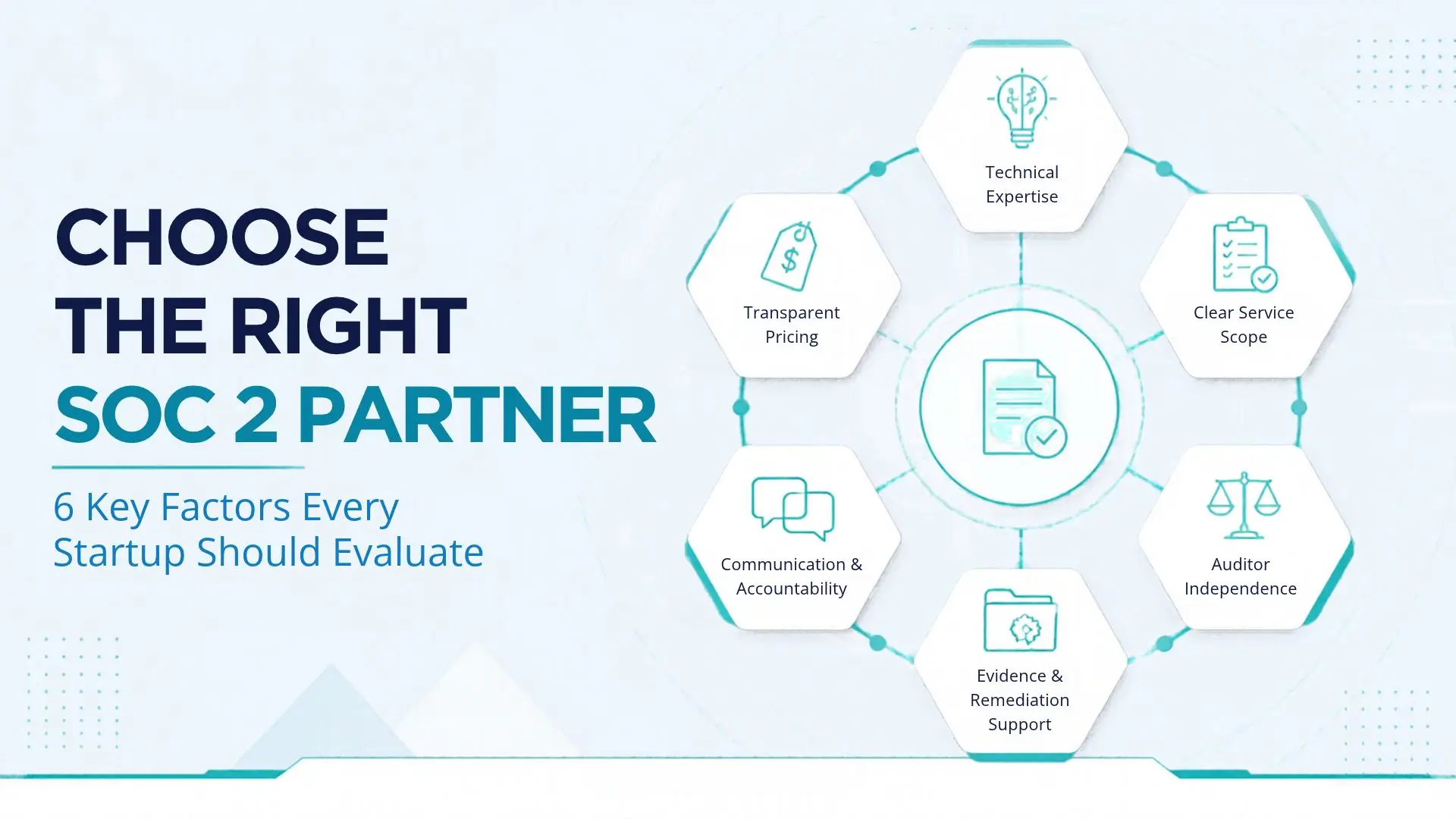
Get fast, budget-friendly SOC 2 compliance for your startup. Streamline gap analysis, automate evidence collection, and pass your audit with Aanetic.
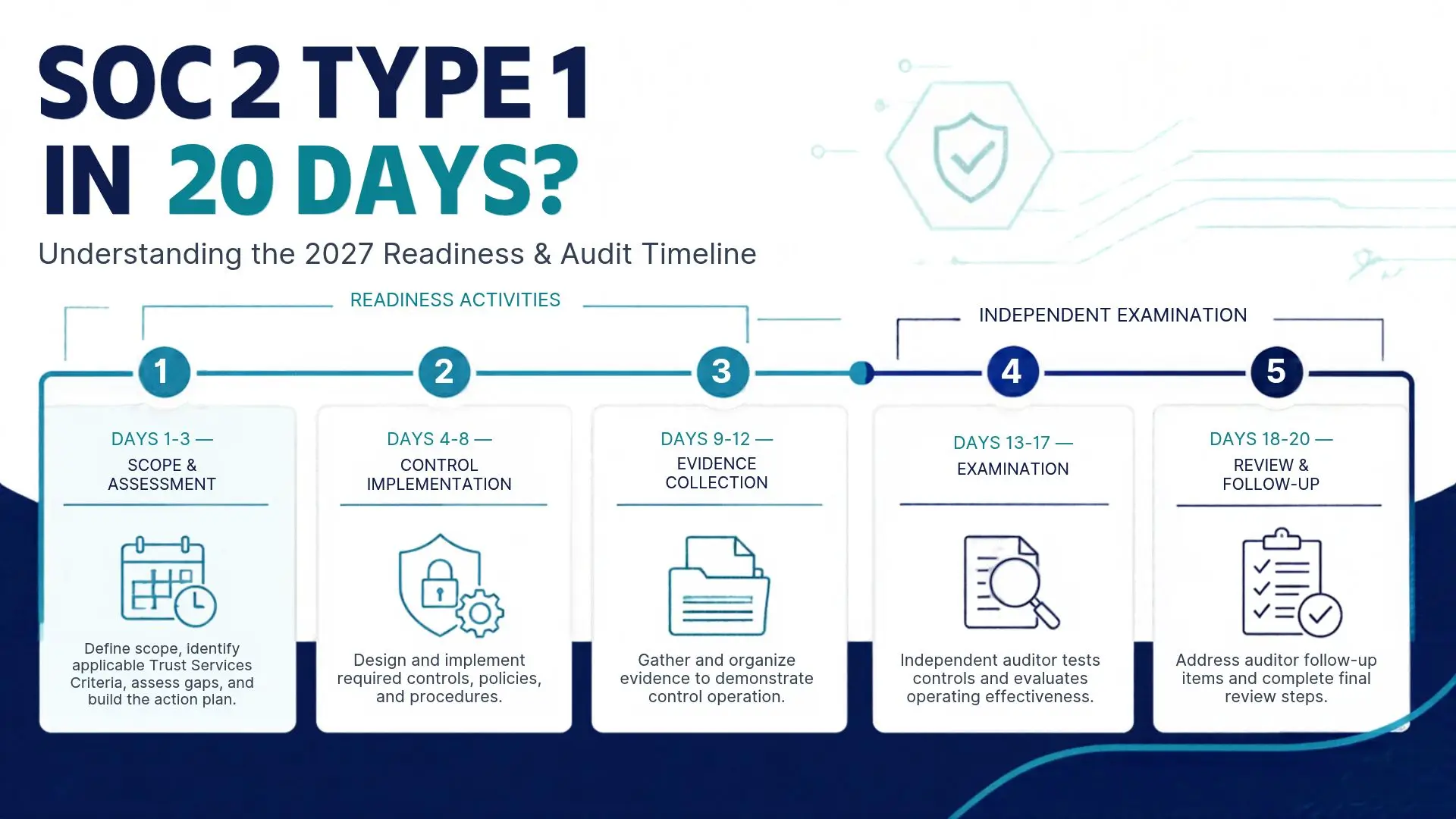
Fast-track SOC 1 and SOC 2 readiness for 2027 with Aanetic. Identify compliance gaps, improve controls, organize evidence, and prepare for an independent audit.
Learn how to fast-track SOC 2 Type 2 with efficient readiness planning, compliance automation, evidence collection, and Aanetic's technology-enabled approach.