27 October 2026
|12:12 pm
|Aanetic Advisory Editorial
Fast-track SOC 1 and SOC 2 readiness for 2027 with Aanetic. Identify compliance gaps, improve controls, organize evidence, and prepare for an independent audit.
As businesses prepare for 2027, demonstrating strong security controls, reliable financial processes, and robust data protection practices is increasingly important. Enterprise customers, international clients, and business partners often expect organizations to demonstrate their commitment to security and operational integrity before signing contracts. This is where SOC 1 and SOC 2 reports play a critical role.
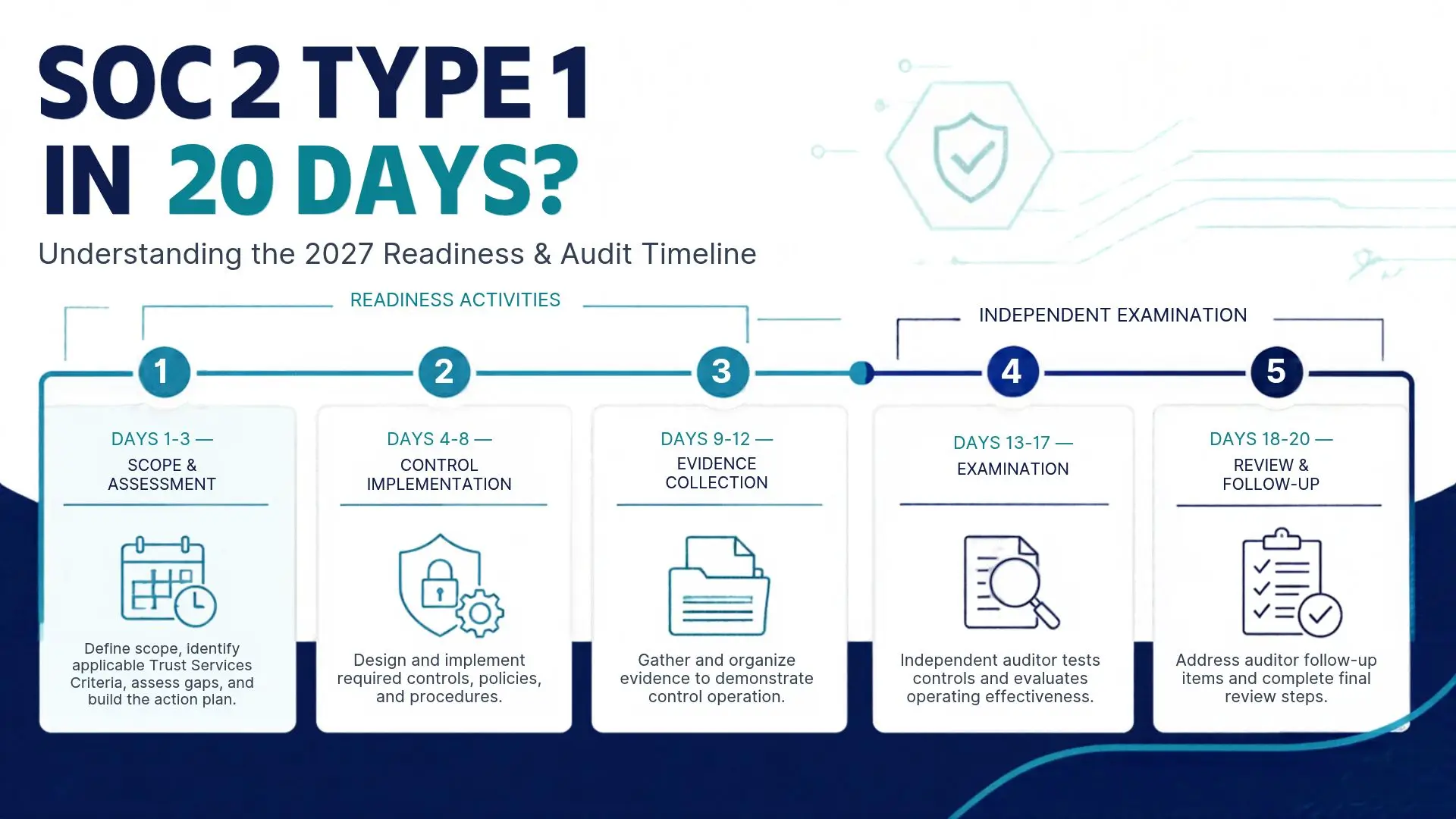
Getting SOC 2 and SOC 1 in just 20 days is a bold goal for businesses looking to accelerate compliance, avoid delays, and be ready for audits. With a clear plan, well-defined controls, organized documents, and expert help, many organizations can make real progress toward audit readiness in just 20 days.
Aanetic helps businesses get ready for SOC 1 and SOC 2 by offering structured assessments, guidance on controls, support with documentation, and a practical approach to compliance. Whether your company manages financial processes or handles sensitive customer data, a solid compliance plan helps you meet changing customer expectations.
Both SOC 1 and SOC 2 are attestation standards developed by the American Institute of Certified Public Accountants (AICPA). They serve distinct purposes within enterprise risk management:
SOC 1 (SSAE 18 / ISAE 3402): Focuses on Internal Controls over Financial Reporting (ICFR). If your software, platform, or hosted services touch customer financial statements, payment workflows, payroll, billing, or ledger data, enterprise procurement will mandate a SOC 1 report.
SOC 2: Focuses on customer data governance assessed against the Trust Services Criteria (TSC): Security (Common Criteria), Availability, Processing Integrity, Confidentiality, and Privacy. Any cloud provider, managed IT provider, or SaaS company that handles client data must be SOC 2-compliant.
Achieving audit readiness within 20 days focuses on completing an accelerated Type 1 attestation and evaluating the design and implementation of your controls at a specific point in time. This report unblocks enterprise procurement immediately while establishing the observation window for your subsequent Type 2 audit.
Determine applicable SOC 2 Trust Services Criteria (Security is mandatory; Availability and Confidentiality are typical additions).
Scope financial transaction workflows for SOC 1 (segregation of duties, payment gateways, batch processing).
Run an automated infrastructure gap analysis against AWS, GCP, Azure, Google Workspace, GitHub, and identity providers to highlight unmapped controls instantly.
Access Control: Enforce company-wide multi-factor authentication (MFA), role-based access control (RBAC), and automated offboarding triggers.
Data Security & Encryption: Verify AES-256 encryption at rest and TLS 1.3 in transit across all active databases, storage buckets, and public endpoints.
Policy Governance: Adopt pre-built, auditor-approved compliance policies (Incident Response, Disaster Recovery, BC/DR, Vendor Risk Management, Code Review).
Consolidate automated configuration checks, pipeline screenshots, penetration test findings, and background check records into an organized system description (Section 3 of the SOC report).
Conduct an end-to-end readiness assessment to test and resolve any missing control artifacts.
Facilitate access for an accredited AICPA CPA firm.
Provide field clarifications and verify the system design documentation to receive your finalized SOC 1 and SOC 2 Type 1 attestation reports.
It’s hard to achieve rapid compliance if you manage audits on your own or use scattered spreadsheets. Here’s how Aanetic solves the five biggest challenges:
Dual-Scope Confusion (ICFR vs. Security): Teams often over-scope financial reporting controls (SOC 1) or misapply security criteria (SOC 2).
How Aanetic Helps: Clarifies system boundaries early so you audit only what enterprise buyers require without wasting resources.
Manual Evidence Gathering & Developer Fatigue: Chasing IAM configs, access logs, and PR approvals pulls engineers away from shipping core features.
How Aanetic Helps: Automates evidence collection across AWS, GCP, Azure, GitHub, and identity providers, cutting manual work by up to 80%.
Unrealistic, Generic Security Policies: Off-the-shelf policy templates rarely reflect how agile development teams actually work, leading to audit-time exceptions.
How Aanetic Helps: Deploys pre-engineered, auditor-tested policy frameworks tailored to modern cloud architectures.
Auditor Miscommunication: Technical teams and financial auditors often speak different languages, creating prolonged back-and-forth review cycles.
How Aanetic Helps: Manages auditor handoffs, prepares your system description, and acts as your technical liaison directly with independent CPA firms.
Control Drift After the Audit: Passing a Type 1 audit on Day 20 doesn’t help if your controls don’t stay in place before the Type 2 observation period starts.
How Aanetic Helps: Establishes continuous automated monitoring from Day 1 to ensure seamless Type 2 readiness.
Shorten Enterprise Sales Cycles: Eliminate months of back-and-forth security questionnaires with an authoritative, independent third-party attestation.
Win High-Value RFPs: Qualify for strict enterprise and financial services contracts that require upfront vendor compliance.
Prevent Security and Financial Drift: Formalize internal operational security, change management, and financial reconciliations before expanding system complexity.
Reduce Overall Audit Overhead: Tackling SOC 1 and SOC 2 in a single, coordinated engagement minimizes total audit preparation costs and internal team fatigue.
Hands-on Technical Remediation: While basic automated dashboards only alert you to missing controls, Aanetic’s cybersecurity engineers actively configure policy controls, fine-tune IAM policies, review VPC setups, and build auditor-approved workflows alongside your team.
Streamlined Multi-Framework Alignment: Eliminate duplicative work. Aanetic simultaneously maps your SOC 2 Security, Confidentiality, and Privacy controls to ISO 27001, HIPAA, and India's Digital Personal Data Protection (DPDP) Act, minimizing effort across your entire compliance stack.
Pre-Vetted CPA Partner Ecosystem: Skip cold outreach to traditional accounting firms. Aanetic connects your team with accredited, tech-native CPA audit partners who are accustomed to automated evidence pipelines, ensuring predictable pricing and tight turnaround times.
Continuous Monitoring to Type 2 Readiness: The transition from Type 1 to Type 2 is fully automated. Aanetic maintains continuous background control oversight, ensuring zero control drift across your observation period.
Achieving enterprise-grade assurance does not have to stall your engineering sprints or delay your revenue goals. Preparing your infrastructure to get SOC 2 and SOC 1 in 20 days positions your business to close high-value deals with confidence.
Reach out to Aanetic today to schedule your compliance readiness assessment, identify architecture gaps, and fast-track your multi-framework audit timeline.
Yes, you can get a Type 1 report in 20 days. Type 1 audits assess your control design at a single point in time, so enabling fast delivery relies on automated evidence collection and readiness support. Type 2 audits need an extra 3 to 12 months for observation.
Need enterprise guidance on PCI DSS, SOC 2, or RBI compliance frameworks?
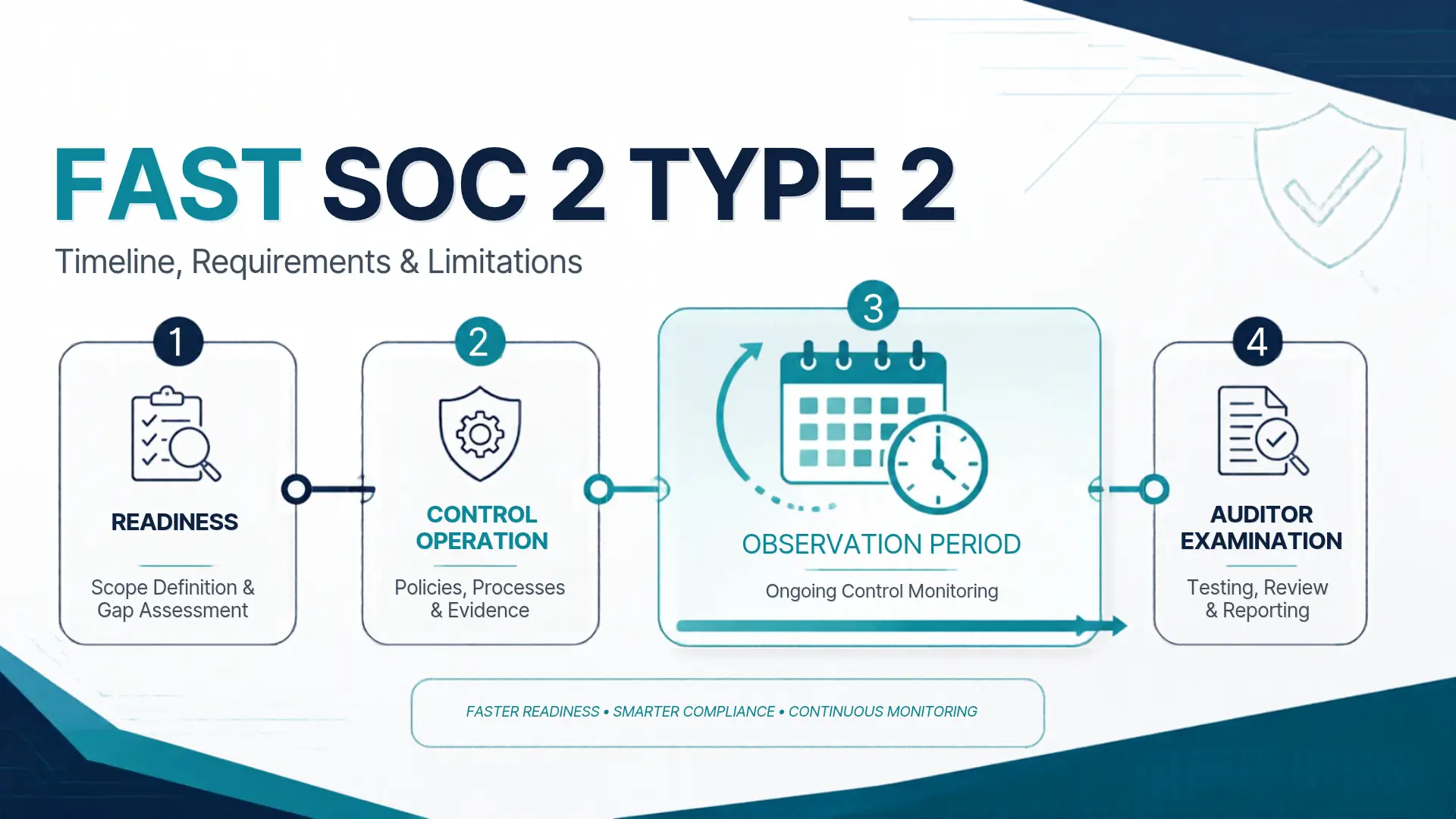
Learn how to fast-track SOC 2 Type 2 with efficient readiness planning, compliance automation, evidence collection, and Aanetic's technology-enabled approach.
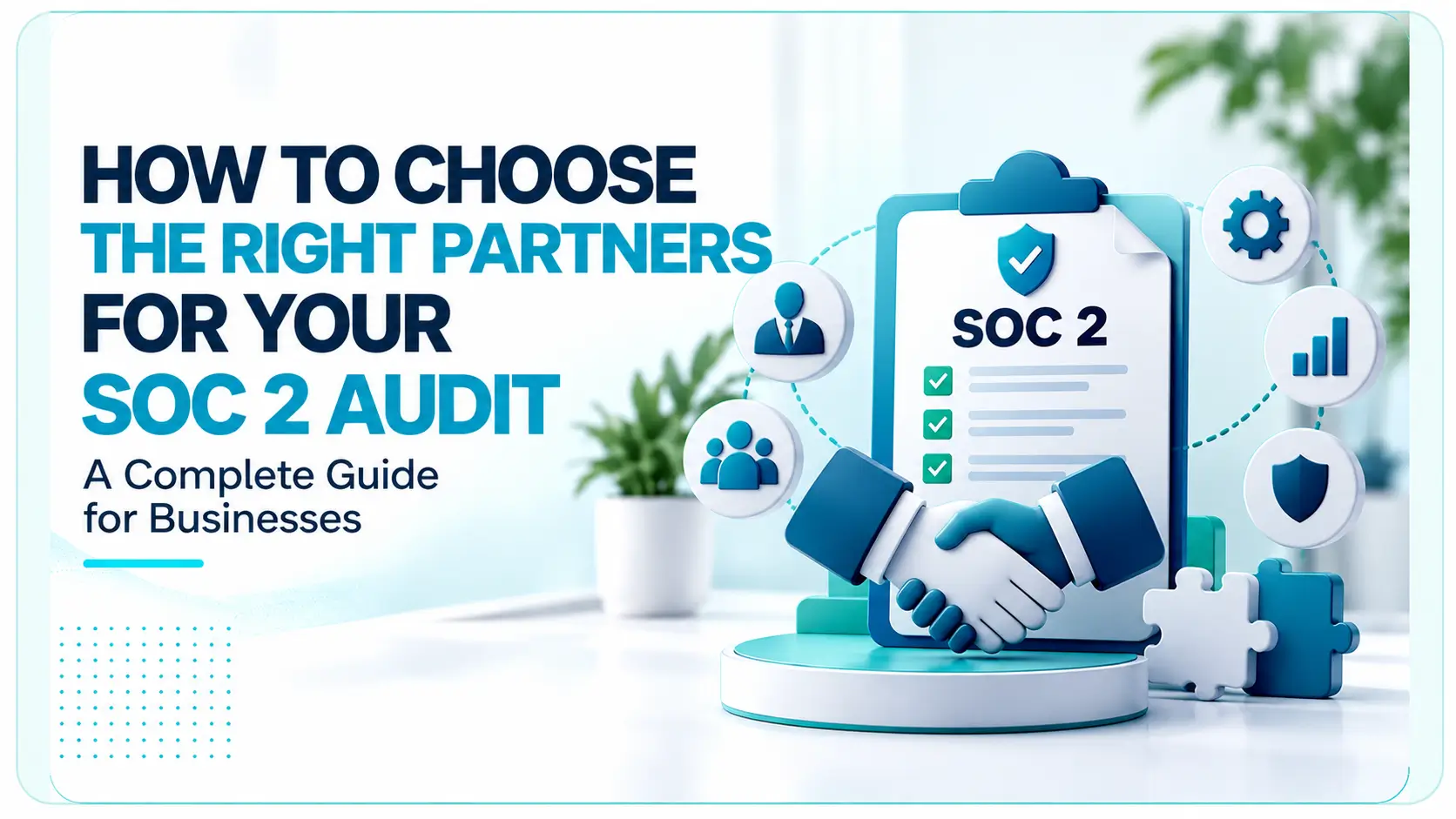
Learn how to choose right partners for your SOC 2 audit. Discover key criteria, Type 1 vs Type 2 scoping, and why Aanetic is India’s top GRC compliance advisor.
Looking for the best DPDP Act consultant in India? Compare top advisory firms for consent architecture, DPIA audits, and DPO services to stay compliant.