
20 November 2026
|3:10 pm
|Aanetic Advisory Editorial
See how SOC 2 controls help Indian SaaS companies prepare for the DPDP Act with practical control mapping and unified readiness support from Aanetic.
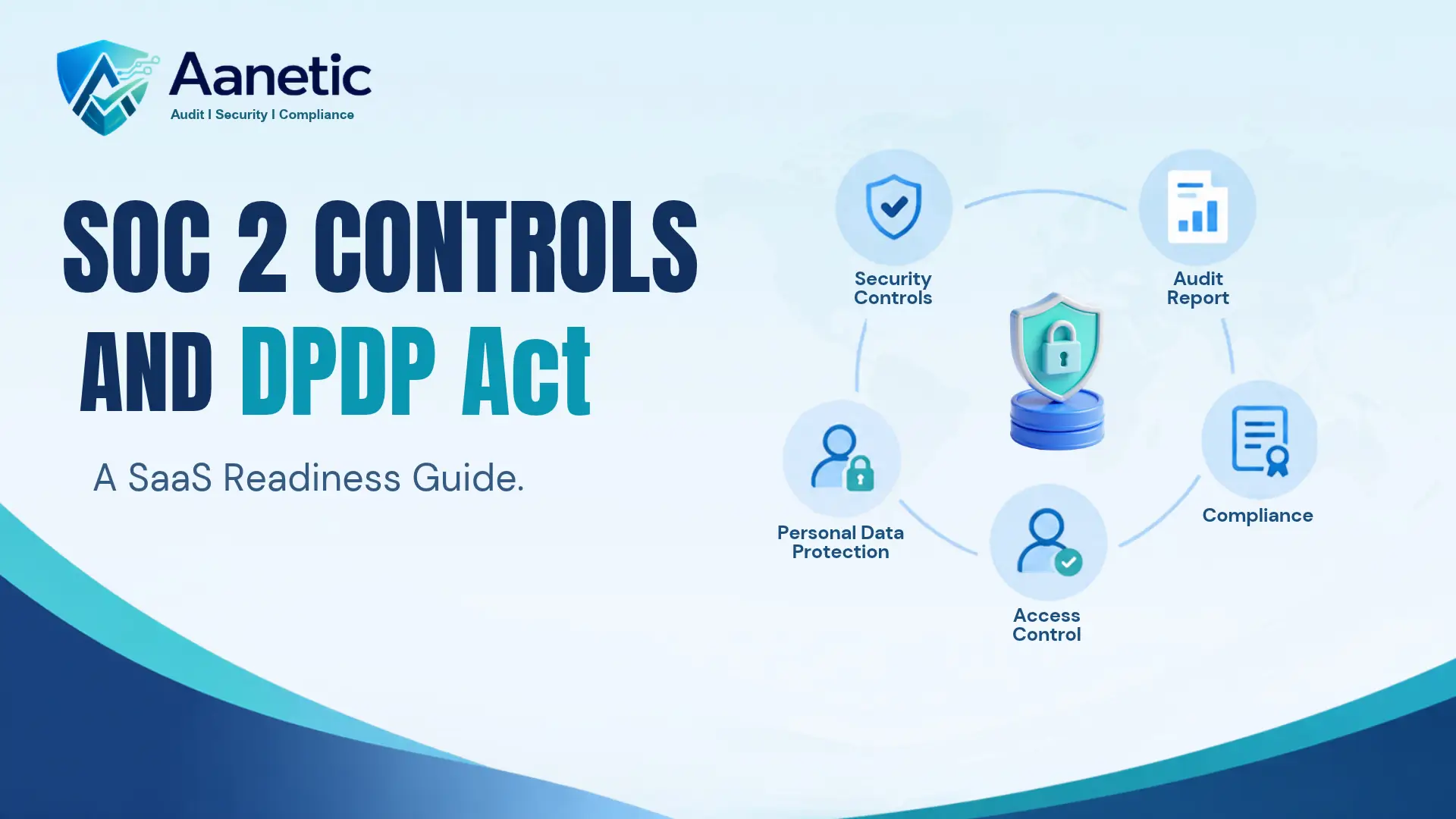
SOC 2 controls can give Indian SaaS companies a useful foundation for preparing for the Digital Personal Data Protection (DPDP) Act, 2023. Practices such as access management, encryption, security monitoring, incident handling, and vendor oversight can help protect digital personal data. However, SOC 2 and the DPDP Act serve different purposes. A SOC 2 report does not automatically establish DPDP compliance.
The practical opportunity is to reuse relevant security controls while identifying the privacy-specific responsibilities that need separate attention. For SaaS businesses, this means connecting technical safeguards with data processing practices, transparency, consent and individual rights.
A SaaS platform may process customer names, contact details, employee records, account information and other digital personal data. Its customers expect that information to be protected, while Indian data protection law establishes responsibilities for organizations processing digital personal data within its scope.
SOC 2 is an independent attestation examination based on the AICPA Trust Services Criteria. It evaluates controls relevant to a service organization's systems and services. The DPDP Act, in contrast, is India's statutory framework governing the processing of digital personal data.
For a SaaS company, the two frameworks can intersect in day-to-day operations. For example, restricting access to customer records supports a secure control environment and helps protect personal data. But privacy compliance requires more than restricting access: the organization must also understand why data is processed, what individuals are told, and how applicable rights are handled.
Under the DPDP Act, a Data Fiduciary determines the purpose and means of processing personal data. A Data Processor processes personal data on behalf of a Data Fiduciary. A Data Principal is the individual to whom the personal data relates.
A SaaS company may act as a Data Fiduciary for information about its own employees, prospects or users. When it processes customer data on a customer's instructions, it may act as that customer's Data Processor. Its role depends on the actual processing arrangement, not simply on the company's industry label.
SOC 2 can provide evidence about how systems and controls are managed. DPDP readiness must additionally examine the company's legal role, processing purposes, notices, consent or other applicable grounds, processor arrangements and mechanisms for handling individual requests.
The most useful approach is to examine each existing control, identify the DPDP-related area it can support and record what remains missing.
SOC 2 Practice: Role-based access, multi-factor authentication, privileged access restrictions and encryption help protect systems and information from unauthorized access.
DPDP Connection: These practices can support the obligation to implement reasonable security safeguards for personal data, including safeguards against personal data breaches.
Additional work: The company should identify where personal data is stored and accessed, define appropriate access responsibilities and assess whether its safeguards are suitable for the data and processing risks involved. A SOC 2 access policy alone does not demonstrate that every personal data store is covered.
SOC 2 Practice: Security logs, monitoring alerts, incident registers and response procedures help teams identify and investigate unusual activity.
DPDP Connection: These capabilities can support security incident management and preparation for applicable personal data breach obligations.
Additional work: The organization needs a privacy-aware breach process. It should establish how an incident involving personal data is identified, assessed, escalated, documented and handled under the applicable notification requirements. A general IT incident procedure may not cover every privacy-specific decision or communication.
SOC 2 Practice: Risk assessments, control ownership, management reviews and remediation tracking help demonstrate that risks are identified and addressed.
DPDP Connection: These practices can support organizational accountability and the management of risks associated with personal data processing.
Additional work: Privacy risks should be assessed in context. Teams need to consider the categories of personal data, processing purposes, affected individuals, data flows and potential impact. Where additional obligations apply, including those relevant to a Significant Data Fiduciary, they need separate evaluation.
SOC 2 Practice: Vendor due diligence, security reviews, contractual checks and ongoing monitoring help manage third-party risks.
DPDP Connection: These activities can support oversight of Data Processors and other service providers that handle personal data.
Additional work: Review processor contracts and operating arrangements to ensure responsibilities, permitted processing, security expectations, assistance requirements and data handling are appropriately addressed. A generic vendor security questionnaire may not cover all privacy-related contractual needs.
SOC 2 Practice: Backup testing, recovery planning, change approvals and secure development procedures help maintain reliable and controlled systems.
DPDP Connection: These practices can contribute to protecting the availability and integrity of systems that process personal data.
Additional work: Review whether backups, replicas, test environments and software releases create additional copies or uses of personal data. Retention and erasure procedures should account for these environments where applicable. A successful backup test does not, by itself, demonstrate that personal data retention requirements are met.
SOC 2 Practice: Policies, tickets, review records, logs and control evidence show how security procedures are designed and operated.
DPDP Connection: Good records can help an organization demonstrate how it manages personal data processing and related safeguards.
Additional work: Maintain privacy-specific records, such as processing purposes, data categories, relevant notices, consent records where applicable, processor details and request-handling records. Security evidence cannot replace these privacy records. Which Trust Services Criteria Can Support the Work? Security is the common criterion in SOC 2 examinations. The other Trust Services Criteria are included when relevant to the service organization's commitments and system scope.
Security: Provides the core foundation for protecting systems against unauthorized access.
Availability: Supports reliable access to services and systems that process personal data.
Processing Integrity: Addresses whether system processing is complete, valid, accurate, timely and authorized.
Confidentiality: Supports protection of information designated as confidential.
Privacy: Addresses personal information in relation to collection, use, retention, disclosure and disposal according to applicable commitments and criteria.
The SOC 2 Privacy criterion is not the DPDP Act. A company may have a SOC 2 report that includes Privacy and still need a separate assessment against Indian statutory requirements. The applicable SOC 2 criteria depend on the examination scope; organizations should not assume that all five are included in every report.
An established SOC 2 environment may leave important privacy questions unanswered. A separate DPDP assessment should examine whether the organization has appropriate processes for:
Identifying the applicable grounds for processing personal data and communicating required notices.
Managing consent and withdrawal where consent is the applicable basis.
Handling Data Principal requests, including applicable rights to access information, correction, erasure and grievance redressal.
Defining retention and erasure practices for relevant data stores and backups.
Documenting Data Fiduciary and Data Processor responsibilities.
Assessing additional obligations that may apply if the organization is notified as a Significant Data Fiduciary.
These areas involve legal roles, privacy operations and individual-facing processes-not only technical security controls. The organization should assess them against the Act, the notified Rules, and the applicable commencement provisions.
Indian SaaS companies can reduce duplicated effort by starting with their existing SOC 2 documentation rather than rebuilding every security process.
First, review the SOC 2 system scope, control matrix, and evidence repository. Identify which systems process digital personal data and which teams own the related controls. Next, map relevant controls to the DPDP requirements applicable to the company's role and processing activities.
Record the gaps separately. A missing access review may require a security control improvement, while an unclear privacy notice or an incomplete Data Principal request process requires privacy-specific work. Assign owners and deadlines to both categories, then retain evidence of implementation.
Finally, review the mapping when products, data flows, vendors or legal requirements change. Management, security, engineering, legal and privacy teams should share responsibility for the program rather than treating it as an isolated audit exercise.
The DPDP Act and the Digital Personal Data Protection Rules, 2025 were notified with a phased commencement schedule. As of 20 November 2026, the one-year stage has commenced, including section 6(9), section 27(1)(d) and Rule 4 concerning Consent Manager registration. The main set of Data Fiduciary obligations and related operational Rules scheduled for the eighteen-month stage is due to commence on 13 May 2027.
Businesses should use this transition period to assess their processing activities and prepare relevant controls and privacy processes. They should verify the commencement status of each provision rather than assuming that every requirement became enforceable on the date the Rules were notified.
Aanetic Technology supports SOC 2 readiness through gap identification, control and documentation support, evidence preparation and audit coordination. Its compliance tools also cover areas such as consent management, PII discovery, Privacy Suite, DPIA, RoPA and third-party risk management.
For Indian SaaS companies, these capabilities can help connect an established security control environment with broader privacy preparation. The right starting point is to review the company's SOC 2 scope, understand how personal data moves through its services and identify the additional privacy processes it needs.
Aanetic supports readiness and compliance preparation; the independent CPA firm remains responsible for conducting a SOC 2 examination and issuing its report. Organizations should also obtain appropriate legal advice when interpreting their specific DPDP obligations.
Want to connect your SOC 2 controls with DPDP readiness? Discuss your security and privacy compliance requirements with Aanetic Technology.
No. SOC 2 evaluates controls against the AICPA Trust Services Criteria, while the DPDP Act establishes India’s legal requirements for processing digital personal data. SOC 2 controls can support security-related preparation, but privacy obligations require a separate assessment.
Need enterprise guidance on PCI DSS, SOC 2, or RBI compliance frameworks?

Partner with Aanetic for offshore SOC 2 compliance and readiness. Streamline gap assessments, organize audit evidence, and accelerate US SaaS readiness.
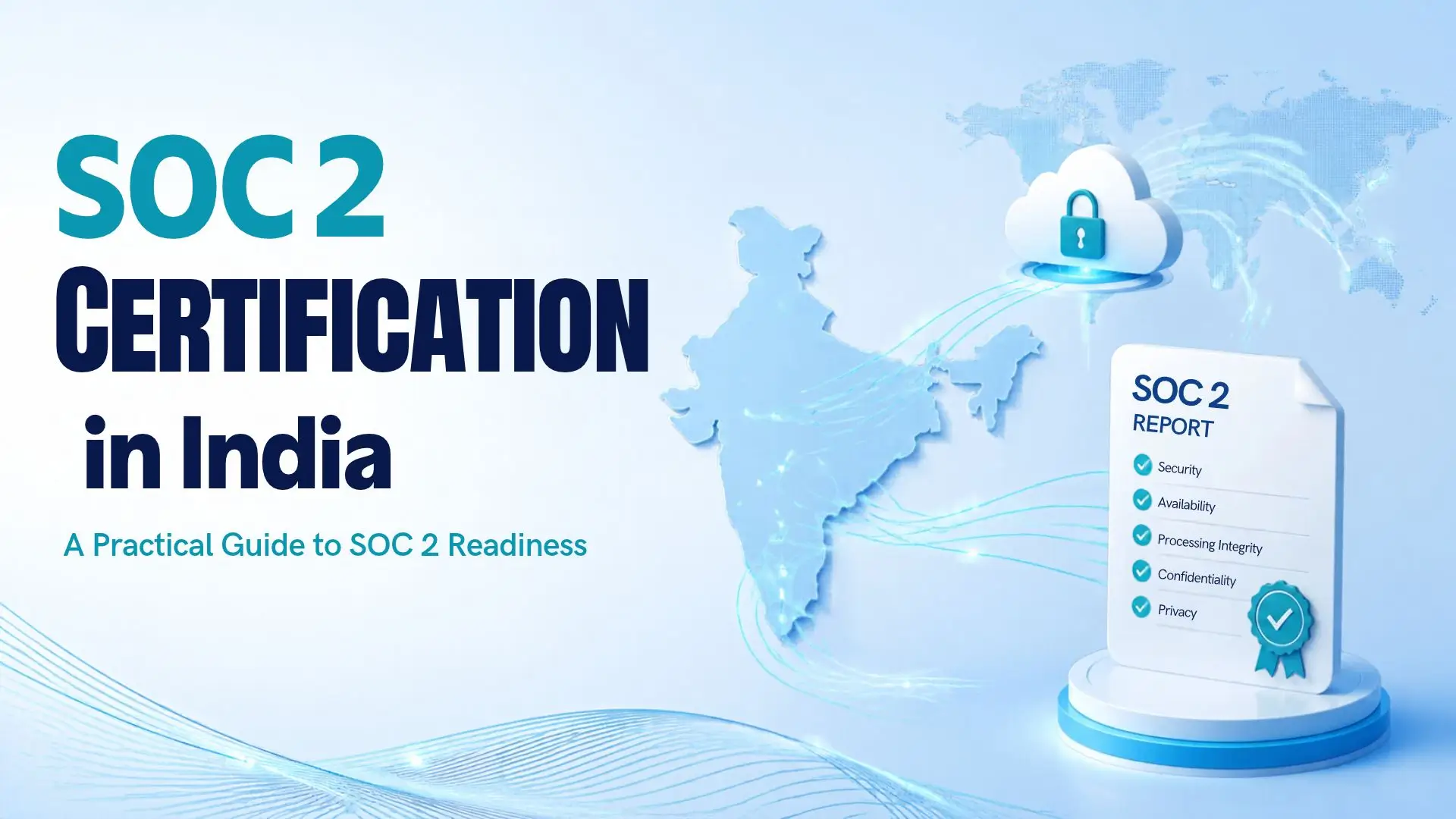
Explore SOC 2 certification and audit services in India with Aanetic. Get expert support for Type 1 and Type 2 readiness, compliance, and audit coordination.
Top 2 SOC 2 Companies in India for US Businesses (2026). Compare KavachOne and Aanetic for SOC 2 readiness, audit support and compliance services.