18 November 2026
|8:55 pm
|Aanetic Advisory Editorial
Explore SOC 2 certification and audit services in India with Aanetic. Get expert support for Type 1 and Type 2 readiness, compliance, and audit coordination.
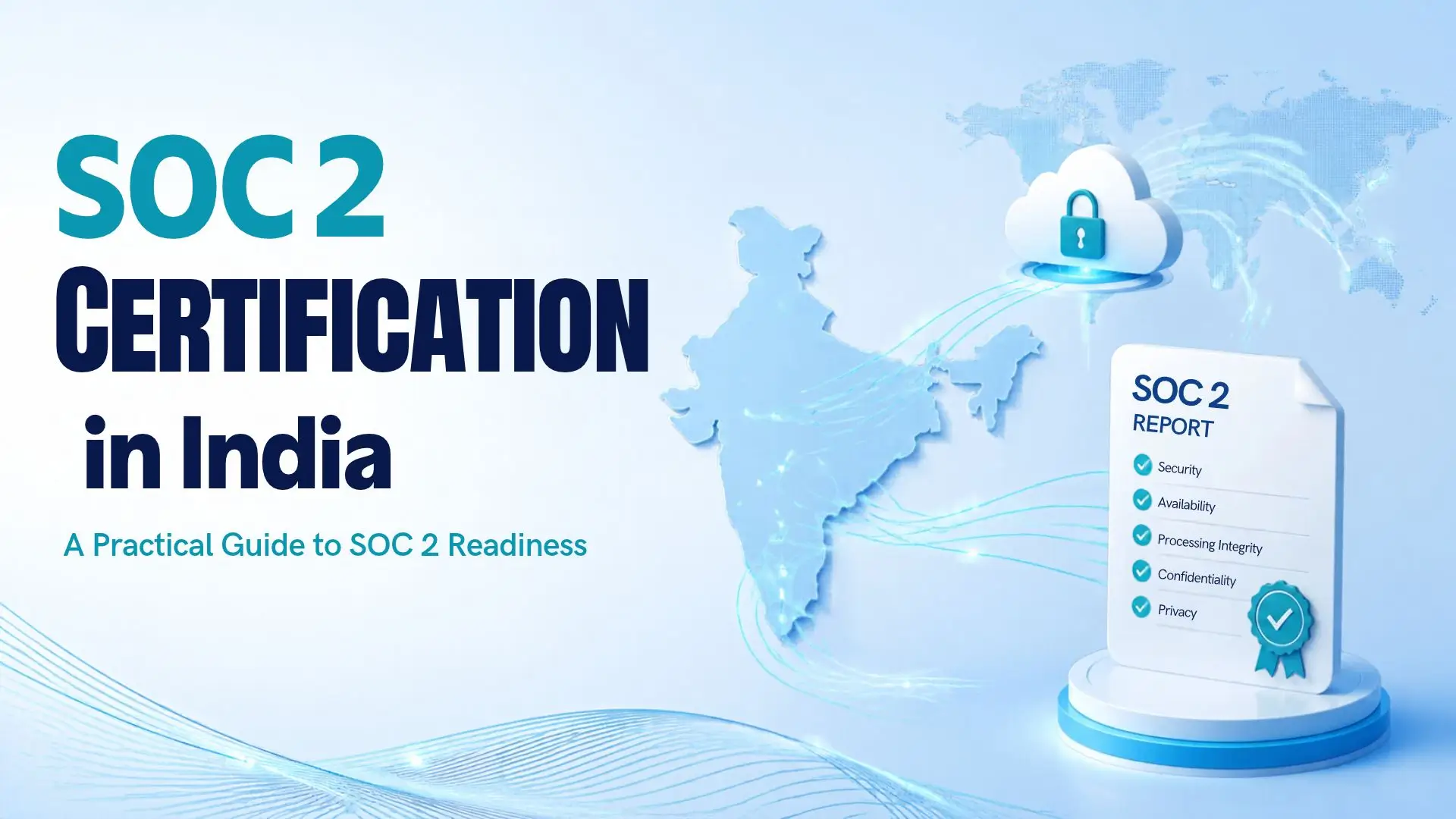
Indian technology businesses increasingly serve customers that expect clear evidence of information security and operational reliability. During vendor assessments, enterprise procurement teams may ask how a service provider protects customer information, manages system access, handles incidents, and maintains critical services. A SOC 2 report can help answer these questions through an independent examination of relevant controls.
SOC 2 Certification in India is a commonly used search term, but SOC 2 is technically an attestation examination and report, not a conventional certification. It evaluates controls at a service organization against selected AICPA Trust Services Criteria. For an Indian company, preparing for SOC 2 means understanding which services and systems are in scope, establishing appropriate controls, and maintaining evidence demonstrating how those controls operate.
SOC 2 is particularly relevant to businesses that process, store, or access information on behalf of other organizations. This includes SaaS providers, cloud service companies, IT outsourcing firms, fintech platforms, and technology businesses that support international customers.
A prospective customer may want assurance that a software provider has defined security responsibilities, restricted access to production systems and processes for responding to security incidents. A SOC 2 report gives customers an independent view of the controls described and examined within its scope.
It can also make vendor reviews more structured. Instead of answering every security questionnaire from the beginning, an organization may use its report to address recurring questions about its control environment. However, customers can still request additional information, and a SOC 2 report does not automatically satisfy every contractual or regulatory requirement.
One of the most important early decisions is determining the boundaries of the SOC 2 examination. The scope should describe the service being provided and the systems, people, processes, and infrastructure that support it. For example, an Indian SaaS company may offer a cloud-based application to customers in the United States. Its in-scope environment could include the production application, cloud hosting account, employee identity platform, customer support operations, deployment pipeline, and incident management process. The organization should identify:
The services and products covered by the report.
The infrastructure and applications supporting those services.
Teams responsible for operating and securing the environment.
External vendors that perform important functions.
Locations and processes relevant to service delivery.
An unclear boundary can create avoidable problems. A company might document controls for its production environment but overlook privileged access used by developers or a third-party service that supports customer data processing. Defining the system carefully helps management and the independent auditor understand what is being examined.
SOC 2 examinations use the AICPA Trust Services Criteria. Security is the common criterion, while the other criteria are included when relevant to the organization's commitments, services, and system risks.
Security: Examines whether systems are protected against unauthorized access and other security threats. Access restrictions, vulnerability management, security monitoring and incident response are relevant examples.
Availability: Addresses whether systems and services are available for operation and use as committed. Backup arrangements, disaster recovery planning, capacity monitoring and service availability procedures may be relevant.
Processing Integrity: Considers whether system processing is complete, valid, accurate, timely and authorized. This can matter to platforms that process transactions, perform calculations, or handle business-critical information.
Confidentiality: Relates to protecting information designated as confidential. Classification, encryption, access restrictions and secure disposal practices can support this objective.
Privacy: Addresses how personal information is collected, used, retained, disclosed and disposed of in accordance with applicable commitments and criteria.
An organization should not select every criterion to make its report appear broader. The decision should follow an assessment of the services delivered, contractual commitments, data handled and risks relevant to the system. The selected criteria should be agreed and clearly reflected in the examination scope.
Having a policy document does not, by itself, demonstrate that a control works. An independent auditor examines the organization's system description and relevant controls, then performs procedures appropriate to the selected report type.
Depending on the scope, the auditor may examine access approvals, employee onboarding and termination records, vulnerability reports, change management tickets, incident records, backup results, risk assessments and vendor oversight activities.
The auditor may also select samples and inspect supporting evidence. For example, a company may state that it regularly reviews privileged access. Supporting evidence could include the review schedule, system-generated user lists, reviewer approvals and records showing that inappropriate access was removed.
Evidence should be reliable, relevant and connected to the control being examined. Screenshots without dates or identifiable system context may be difficult to evaluate. A well-organized evidence repository should make it possible to understand what happened, when it happened, who performed the activity, and which system or process was involved.
A frequent preparation mistake is treating evidence collection as a task that begins shortly before the audit. This creates pressure on teams and can expose gaps in control operation.
Instead, businesses should identify evidence requirements while designing their controls. Assign an owner to each important activity and establish how completion will be recorded. Where practical, use existing identity, cloud, ticketing and monitoring systems to retain records rather than relying entirely on manually prepared documents.
Consider a quarterly access review. The organization should retain the reviewed user listing, the date of review, the responsible approver, the decisions made, and evidence of follow-up actions. If access is removed, the related ticket or system record can demonstrate that the action was completed.
Evidence must reflect actual operations. Reconstructing records after an activity has occurred can raise reliability concerns and may not demonstrate that the control operated as intended.
Some issues arise because organizations approach SOC 2 as a documentation exercise rather than an operational control program.
Unclear control ownership: Policies may describe responsibilities without identifying who performs and reviews each activity. Assign named roles and escalation paths.
Overly broad scope: Including systems that do not support the service can increase work and complexity. Define boundaries based on actual service delivery and risk.
Inconsistent evidence: A control may exist but lack records showing that it operated at the required frequency. Establish evidence retention practices from the beginning.
Ignoring vendors: External providers can support critical infrastructure or business processes. Understand their responsibilities and determine how relevant risks are monitored.
Last-minute remediation: Delaying technical improvements can leave insufficient time to demonstrate consistent operation. Identify gaps early and prioritize remediation based on risk.
A SOC 2 Type 1 examination evaluates the design of relevant controls at a specified point in time. It can help an organization demonstrate that its control framework is suitably designed as of the examination date.
A SOC 2 Type 2 examination evaluates both control design and operating effectiveness over a defined observation period. The auditor tests evidence to determine whether relevant controls operated effectively during that period.
The right choice depends on customer expectations, business maturity and commercial timelines. A Type 1 report is not a substitute for a Type 2 report when a customer specifically requires evidence of operating effectiveness over time. A Type 2 observation period cannot be compressed into a few days simply by completing documentation quickly.
There is no universal timeline or fixed price for SOC 2. Preparation and examination effort depend on the organization's size, system complexity, selected criteria, number of locations, existing security practices, vendor dependencies, and report type.
A business with established access management, documented change controls and reliable evidence may have fewer gaps to address than an organization building these practices for the first time. Type 2 also requires an agreed observation period, which affects the overall schedule.
Costs may include readiness support, security improvements, compliance tools, internal staff time, and independent auditor fees. Businesses should request a clear breakdown of these elements before approving an engagement. A low consulting estimate does not necessarily represent the total cost of completing the examination.
Aanetic Technology supports organizations preparing for SOC 2 through readiness assessment, scope and gap identification, control guidance, documentation and evidence preparation, and coordination with an independent CPA or attestation firm.
The preparation process should reflect the organization's actual technology environment and service commitments. Rather than relying only on generic policy templates, teams need practical guidance on control responsibilities, implementation gaps, and the records required to demonstrate ongoing operation.
Aanetic's SOC audit support is designed to help businesses organize their readiness activities and approach the independent examination with a clearer understanding of requirements. The independent CPA firm remains responsible for conducting the examination and issuing the SOC 2 report. Professional independence requirements must also be respected when arranging advisory and audit services.
Receiving a SOC 2 report should not mark the end of the security program. Systems change, employees join and leave, vendors are replaced, and new risks emerge. Controls therefore need regular ownership and review.
Organizations should continue to monitor access, record security incidents, review vulnerabilities, test backups, and maintain vendor oversight. Changes to infrastructure or service delivery should also be assessed for their effect on existing controls and the system description.
A recurring internal review can help management identify missing evidence, overdue control activities, and changes that may affect the next examination. This makes future reporting more manageable while keeping security practices connected to everyday operations.
Prepare for SOC 2 with a clear plan. If your business is evaluating SOC 2 Certification in India, our Expert Aanetic team can help you understand readiness requirements, identify control gaps, and organize audit preparation.
SOC 2 is not a general legal certification requirement for every Indian company. It is commonly requested by enterprise customers, international clients, and business partners as evidence of controls over information security and related services.
Need enterprise guidance on PCI DSS, SOC 2, or RBI compliance frameworks?
Top 2 SOC 2 Companies in India for US Businesses (2026). Compare KavachOne and Aanetic for SOC 2 readiness, audit support and compliance services.
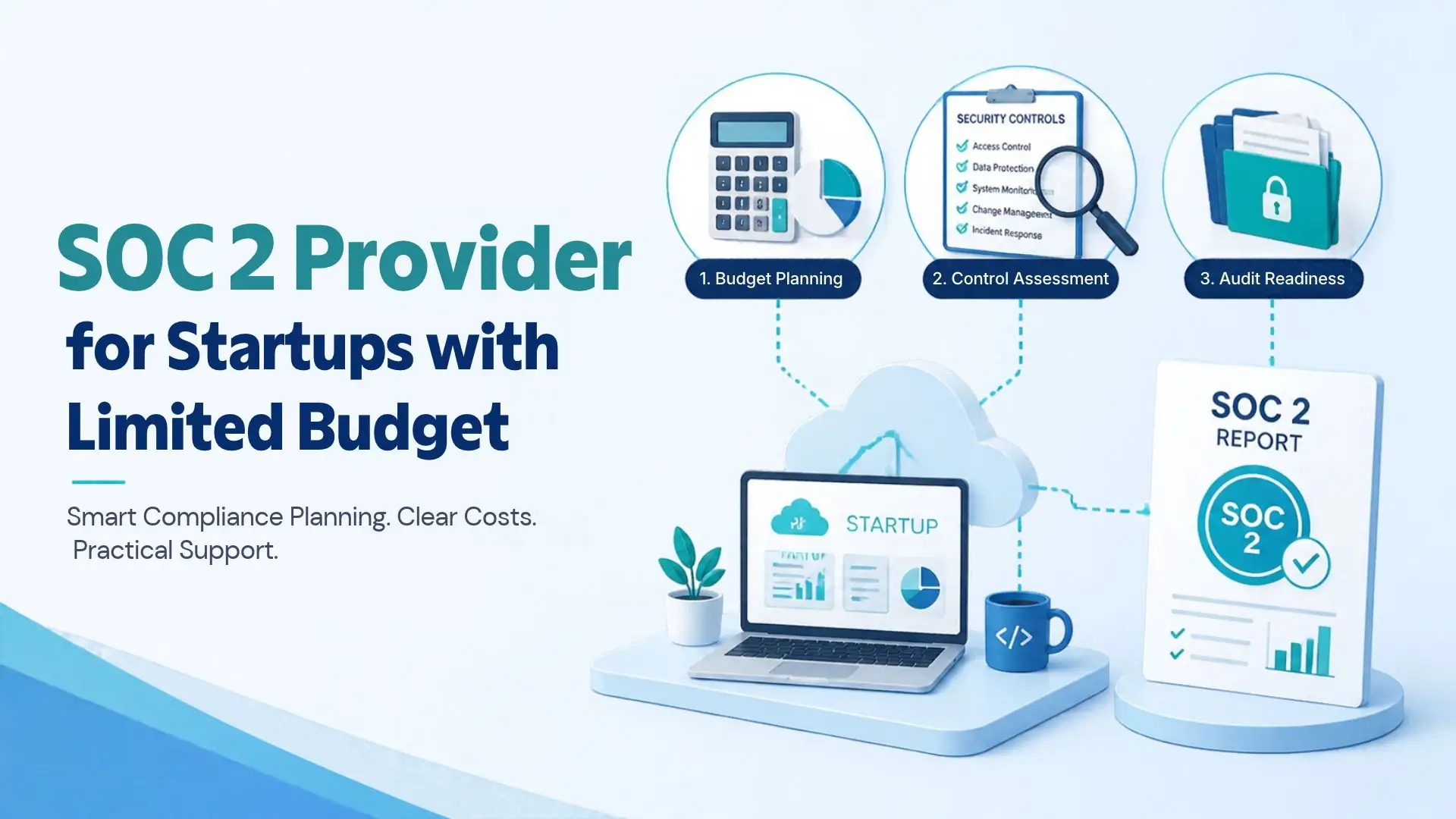
Find a SOC 2 Provider for Startups with Limited Budget. Learn how to evaluate service scope, pricing, audit support and readiness expertise with Aanetic.
Explore Affordable SOC 2 Certification for startups with practical planning, readiness guidance, audit, and cost-conscious compliance support from Aanetic.