12 November 2026
|5:03 pm
|Aanetic Advisory Editorial
Discover how to prepare for SOC 2 Type 1 in 20 days. Follow our 20-day checklist for audit scoping, technical controls, policies, and evidence readiness.
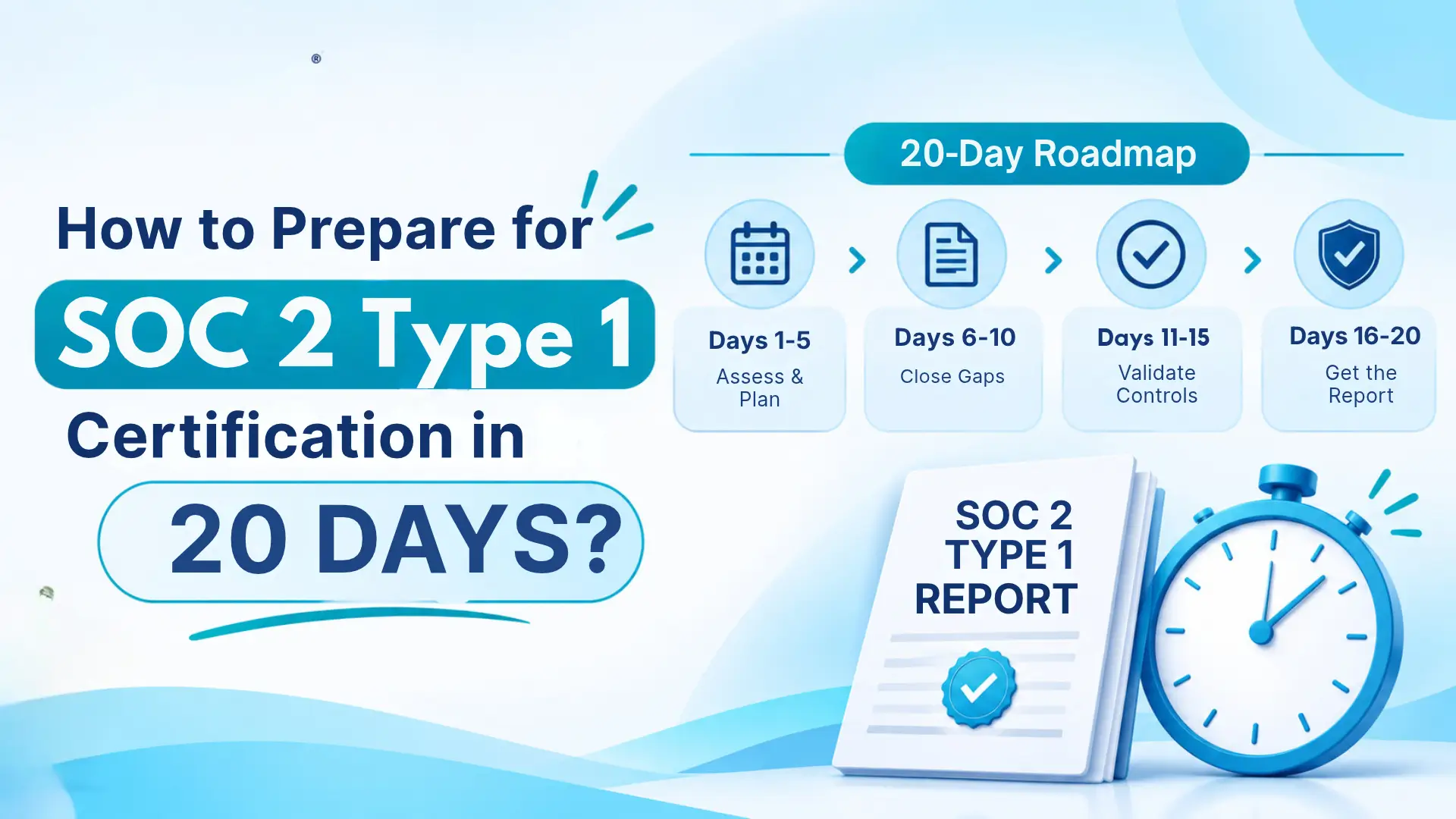
Closing an enterprise SaaS deal or onboarding a regulated B2B client often comes down to one critical security milestone: demonstrating independent assurance over your internal controls. While traditional compliance timelines can stretch over several months, organizations with a clear roadmap and modern compliance automation can significantly streamline their readiness phase. If your team is racing against a procurement deadline, learning how to prepare for SOC 2 Type 1 in 20 days requires disciplined scoping, rapid technical configuration, and structured evidence collection.
Unlike a Type 2 examination, which evaluates control performance over a 3- to 12-month observation window, a SOC 2 Type 1 report assesses whether your security controls are suitably designed and implemented at a specific point in time. By eliminating the multi-month observation requirement, a 20-day sprint becomes an achievable operational goal for agile engineering and security teams.
Before launching a 20-day readiness sprint, your team must understand what an AICPA-licensed CPA firm actually evaluates during a SOC 2 Type 1 audit. SOC 2 is built around the five AICPA Trust Services Criteria (TSC):
Security (Common Criteria): Mandatory for every SOC 2 audit, covering logical and physical access controls, system operations, change management, risk mitigation, and incident response.
Availability: Focuses on system uptime, disaster recovery, backups, and business continuity commitments.
Confidentiality: Addresses how sensitive business data—such as intellectual property, financial records, and customer contracts—is encrypted, restricted, and securely disposed of.
Processing Integrity: Verifies that systems process data accurately, completely, and promptly.
Privacy: Evaluates how personal information is collected, used, retained, and disclosed in alignment with privacy notices.
For an accelerated 20-day SOC 2 readiness plan, most fast-growing startups and SaaS companies scope their initial Type 1 report strictly around the Security criteria—adding Availability or Confidentiality only when explicitly mandated by a customer contract.
Breaking down your SOC 2 Type 1 checklist into four focused 5-day sprints prevents bottlenecks and keeps engineering, HR, and leadership aligned.
The biggest threat to a 20-day timeline is over-scoping. During the first five days, establish clear boundaries and identify missing safeguards:
Define In-Scope Infrastructure: Map out the exact cloud environments (such as AWS, GCP, or Azure), production databases, code repositories (like GitHub or GitLab), and identity providers that store, process, or transmit customer data. Exclude disconnected marketing tools or internal sandboxes that pose zero customer data risk.
Perform a Baseline Gap Analysis: Measure your current technical configurations and administrative workflows against the AICPA Common Criteria. Document every missing policy, unencrypted volume, or informal onboarding step.
Draft Your System Description: Begin outlining Section III of the SOC 2 report, which describes your infrastructure, software architecture, people, data flows, and third-party subservice organizations.
With gaps identified, your engineering and DevOps teams spend the second sprint hardening production systems so they reflect documented security standards:
Enforce Identity and Access Management (IAM): Mandate phishing-resistant or app-based Multi-Factor Authentication (MFA) across all cloud consoles, source code repositories, SSO portals, and production databases. Apply Role-Based Access Control (RBAC) and the principle of least privilege.
Standardize Change Management: Configure branch protection rules in GitHub or GitLab requiring peer code reviews, automated CI/CD security checks, and status verifications before any code merges into production branches.
Configure Encryption and Network Security: Enforce TLS 1.2 or 1.3 for all data in transit and AES-256 encryption at rest across storage buckets, database instances, and automated snapshots. Restrict SSH/RDP ports and review firewall security and groups.
Set Up Logging and Vulnerability Scanning: Enable centralized audit logging (such as AWS CloudTrail) and run automated vulnerability scans across cloud assets and container images to identify and patch critical exposures.
Technical controls alone will not pass a SOC 2 Type 1 examination; auditors verify that your controls are backed by formal, management-approved governance.
Approve Core Security Policies: Publish and version-control essential policies covering Information Security, Access Control, Change Management, Incident Response, Vendor Risk Management, Risk Assessment, and Business Continuity/Disaster Recovery.
Complete Formal Risk Assessment and Vendor Reviews: Maintain a documented risk register that scores internal and external threats and assigns mitigation owners. Collect SOC 2 reports or security attestations from critical third-party vendors (such as your cloud hosting provider or payment processor).
Execute HR Onboarding and Training Workflows: Verify that all employees have signed confidentiality agreements, completed background checks (where applicable), and finished security awareness training. Document a clear offboarding checklist ensuring system access is revoked promptly upon termination.
The final five days focus on packaging point-in-time proof and validating readiness before the CPA firm begins official fieldwork:
Gather Point-in-Time Evidence: Capture timestamped screenshots, system configuration exports, IAM user lists, encrypted database settings, and policy acknowledgment logs proving every control is active on your target audit date.
Conduct a Pre-Audit Readiness Walkthrough: Test your evidence package against auditor expectations to confirm there are no broken links, outdated policy dates, or unexplained admin accounts.
Initiate CPA Fieldwork: Submit your organized evidence repository to your independent CPA auditor to begin formal Type 1 design testing.
Understanding how abstract criteria translate into daily engineering practices makes rapid implementation much smoother. Below are practical examples of how organizations satisfy key SOC 2 Type 1 requirements:
Control Domain | Practical Implementation Example | Typical Point-in-Time Evidence |
Access Control (CC6.1) | Enforcing SSO with MFA for all engineers accessing AWS and GitHub, and restricting production database access to three senior DevOps leads. | Export of active IAM users, MFA status configuration screenshot, and RBAC permission matrices. |
Change Management (CC8.1) | Blocking direct pushes to the main branch and requiring at least one peer approval plus passing automated unit tests prior to deployment. | GitHub branch protection settings screenshot and sample pull request approval logs. |
Vulnerability Management (CC7.1) | Running weekly automated infrastructure and dependency scans, with a documented SLA for promptly remediating critical vulnerabilities. | Latest vulnerability scan summary report and Jira tickets showing remediation tracking. |
Incident Response (CC7.3) | Maintaining a step-by-step Incident Response Plan with defined escalation contacts, severity tiers, and post-mortem templates. | Version-controlled Incident Response Policy and tabletop exercise or alert routing configuration. |
Executing an aggressive 20-day compliance sprint internally can overwhelm lean engineering teams. Aanetic Technology provides an engineering-first, technology-enabled compliance approach designed to help organizations structure, implement, and validate their SOC 2 controls efficiently without disrupting product development.
Precision Audit Scoping: Aanetic helps define strict production boundaries and maps your infrastructure directly to the relevant Trust Services Criteria, so your team avoids spending cycles on out-of-scope systems.
Hands-On Technical Remediation Guidance: Rather than handing over generic checklists, Aanetic's security specialists provide actionable architectural recommendations for IAM hardening, encryption standards, CI/CD change controls, and cloud logging.
Streamlined Policy and Governance Alignment: Aanetic assists in tailoring information security policies, risk registers, and vendor risk assessments to align with your operational workflows.
Structured Evidence Organization: By centralizing configuration exports, policy approvals, and technical artifacts early, Aanetic helps minimize back-and-forth during CPA fieldwork.
Foundation for Future SOC 2 Type 2 Compliance: Every control designed during your Type 1 readiness phase is structured to support continuous monitoring, ensuring a seamless transition into a Type 2 observation window.
Note: While Aanetic Technology streamlines readiness preparation, gap remediation, and evidence organization, final audit opinions and report issuance are determined independently by an accredited CPA firm based on your organization's control maturity, scope, and evidence completeness.
Knowing how to prepare for SOC 2 Type 1 in 20 days comes down to disciplined prioritization: lock down your system scope early, enforce high-impact technical controls across identity and infrastructure, formalize your security policies, and package clear point-in-time evidence. By approaching readiness as a structured engineering sprint rather than a paperwork bottleneck, you can build lasting customer trust and keep enterprise sales cycles moving forward.
Ready to accelerate your SOC 2 readiness without slowing down your engineering roadmap? Connect with Aanetic Technology to schedule a tailored SOC 2 gap assessment and build a clear, actionable plan toward audit readiness.
Yes, it’s possible to prepare for SOC 2 Type 1 in 20 days if your organization uses modern cloud tools, has strong leadership support, and keeps the project focused. Since Type 1 looks at your controls on a single date instead of over several months, teams that focus on Security and use compliance support can be ready for the audit in a few weeks.
Need enterprise guidance on PCI DSS, SOC 2, or RBI compliance frameworks?
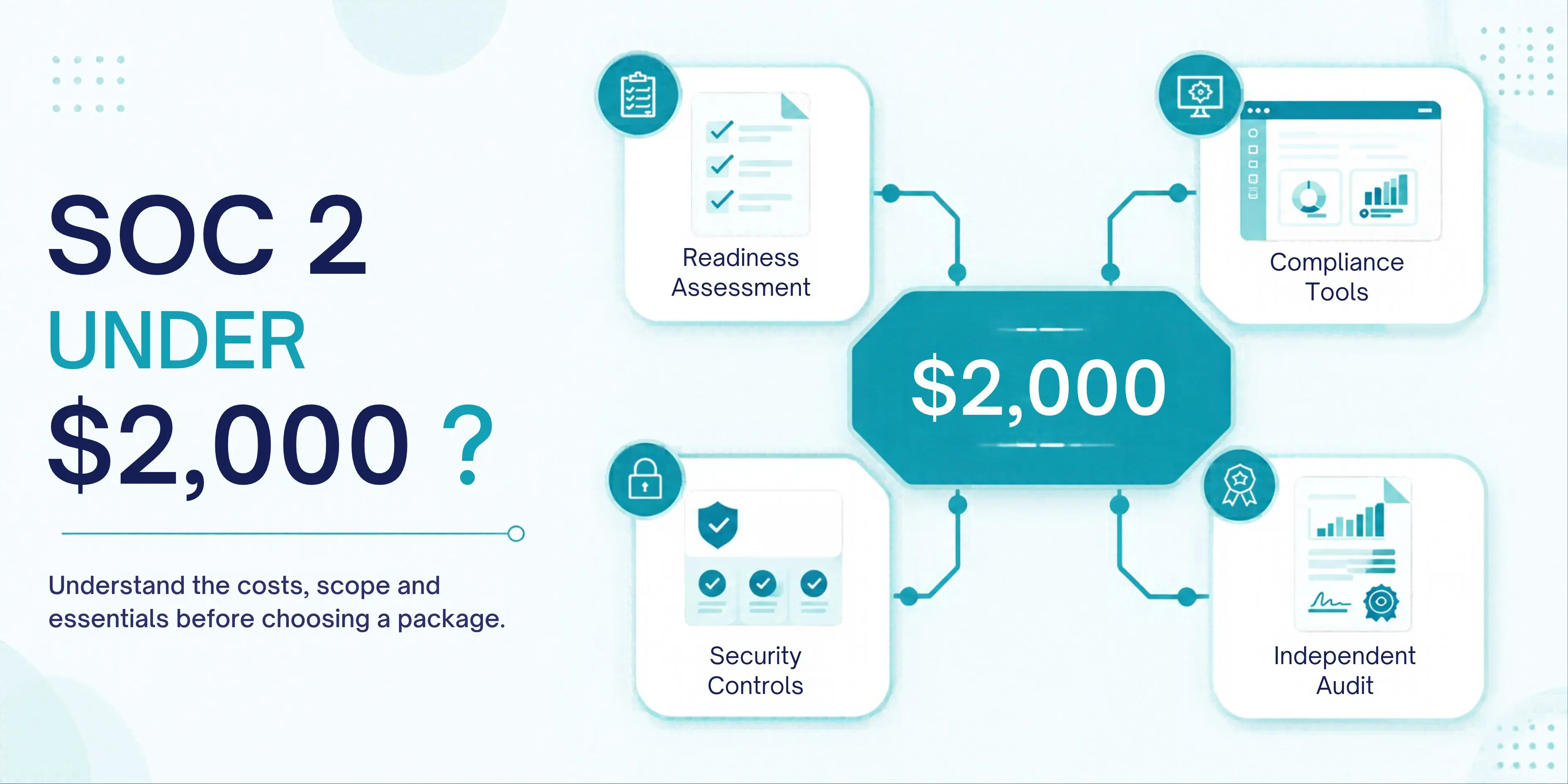
Can you get SOC 2 compliance for under $2,000? Explore real audit costs, practical requirements, and how Aanetic streamlines readiness.
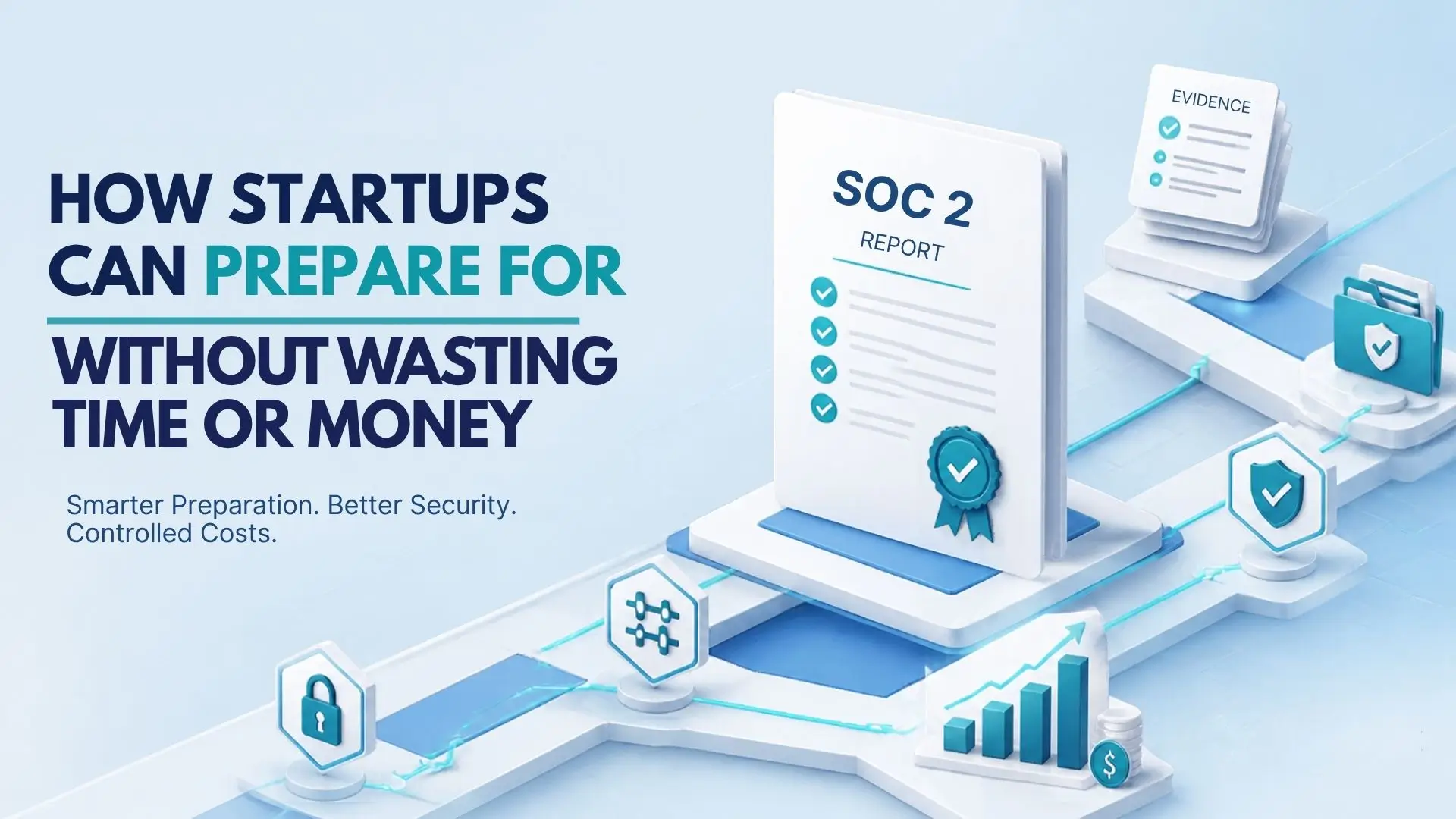
Prepare your startup for SOC 2 without wasting time or money. Learn key scoping tips, core controls, and audit readiness steps.
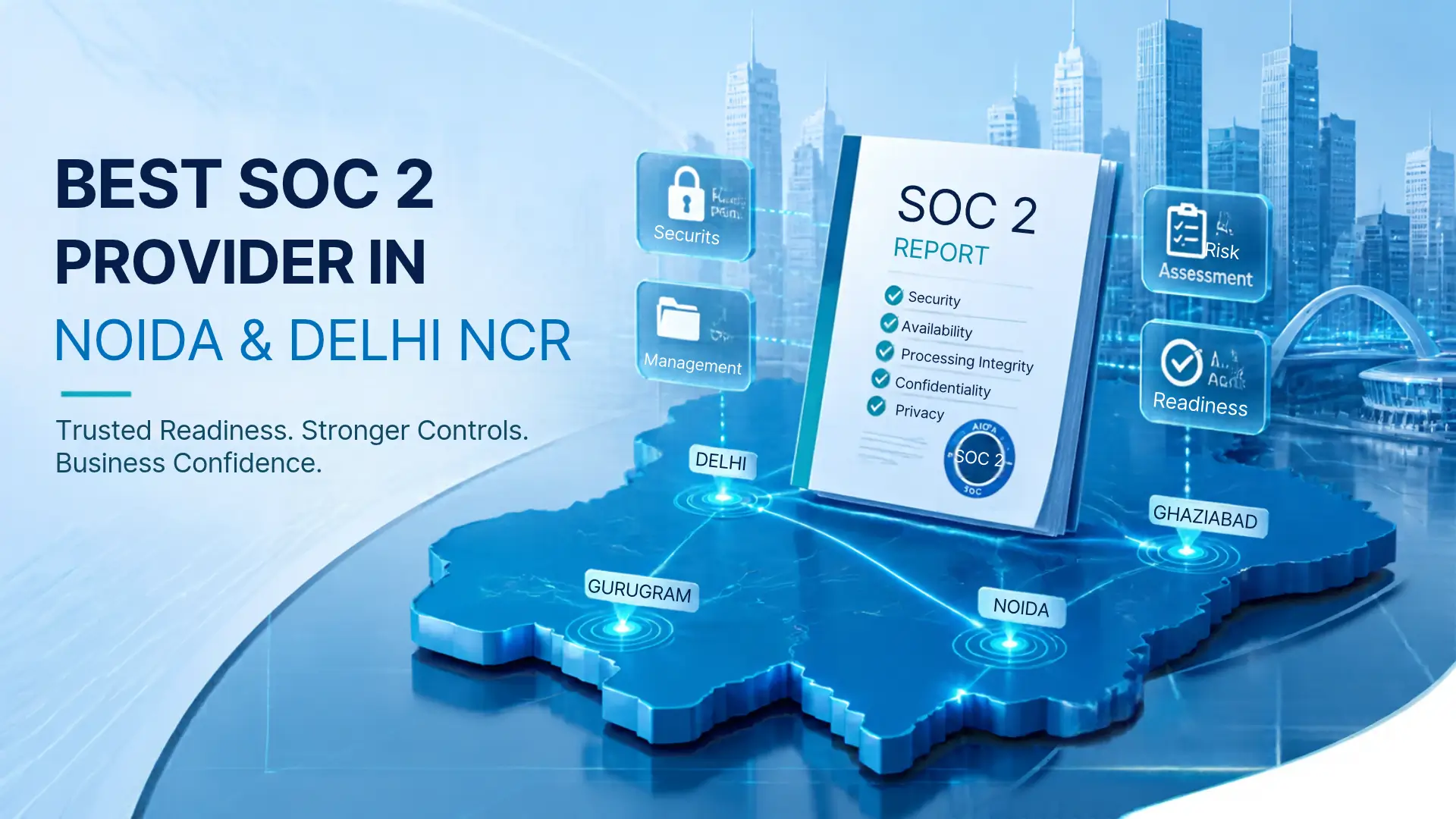
Looking for the best SOC 2 provider in Noida & Delhi NCR? Explore SOC 2 readiness, gap assessment, documentation and audit preparation support with Aanetic.