27 November 2026
|4:04 pm
|Aanetic Advisory Editorial
Learn how long SOC 2 Type 1 takes, including readiness timelines, audit requirements, preparation steps, documentation, and report issuance.
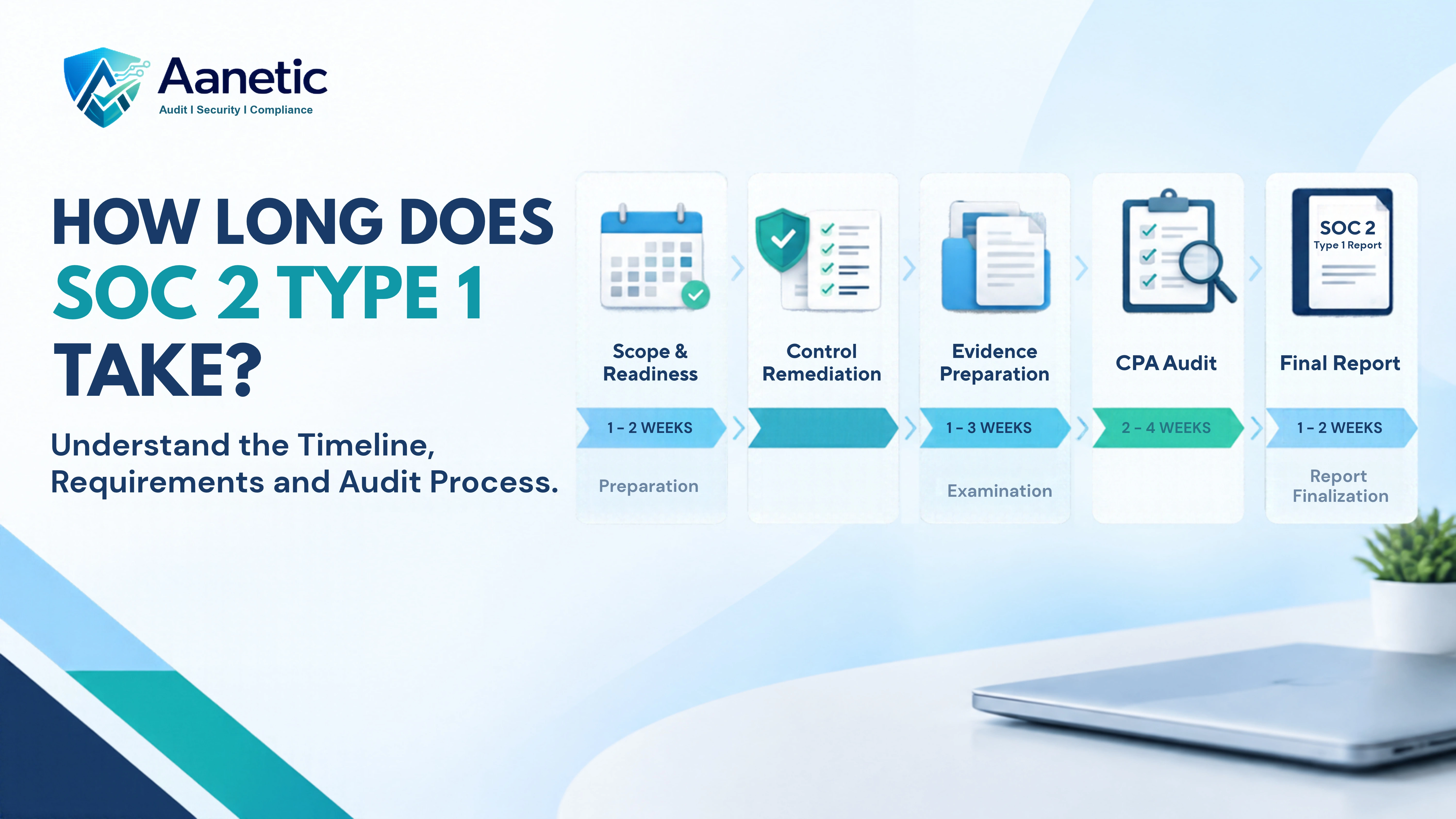
For most first-time organizations, the complete SOC 2 Type 1 process takes approximately 3–6 months, from the initial readiness assessment to the final report. Businesses with mature security controls and organized documentation may complete the process sooner, while companies building their security program from the beginning may need additional time.
Understanding how long SOC 2 Type 1 takes means looking beyond the independent examination. Scope definition, gap remediation, policy preparation, evidence organization and report finalization all contribute to the overall timeline.
For Indian SaaS companies, IT service providers, fintech businesses and startups serving international customers, planning these activities early can make the engagement more predictable.
A practical SOC 2 Type 1 audit timeline is typically 3 to 6 months for a first-time organization. This is a planning estimate, not an AICPA-mandated duration or guaranteed completion period.
The process generally includes six activities:
Defining the system scope and applicable criteria.
Assessing existing security controls.
Implementing missing controls and addressing gaps.
Preparing policies, system descriptions and evidence.
Completing the independent CPA examination.
Reviewing findings and finalizing the SOC 2 Type 1 report.
The examination evaluates whether relevant controls are suitably designed and implemented as of a specified date. Unlike Type 2, it does not require a defined observation period to demonstrate operating effectiveness over time.
The following estimates can help businesses plan their SOC 2 Type 1 preparation time. Some activities can run in parallel, so the ranges should not be added together as a fixed schedule.
Stage | Indicative duration |
Scope definition and readiness assessment | 2–4 weeks |
Control implementation and remediation | 4–12 weeks |
Evidence preparation and internal review | 2–4 weeks |
Independent audit fieldwork | 2–5 weeks |
Report review and finalisation | 2–6 weeks |
The organization identifies the services, applications, infrastructure, teams and processes included in the examination. The readiness assessment reviews existing controls against the selected Trust Services Criteria and highlights areas requiring attention.
This stage addresses identified gaps. Work may include strengthening access permissions, enabling multi-factor authentication, improving change management, updating incident response procedures and formalizing security responsibilities. The duration depends heavily on existing control maturity.
Teams organize policies, approvals, access reviews, risk records, configuration information and other supporting evidence. Evidence preparation can overlap with remediation rather than waiting until every control is complete.
The independent CPA firm reviews the system description, management representations and relevant control evidence. It may conduct interviews, walkthroughs and other examination procedures. Actual fieldwork depends on scope, evidence quality and auditor scheduling.
The auditor completes review procedures, discusses relevant matters with management and finalizes the report. The time required depends on examination findings, outstanding questions and the firm’s internal quality processes.
These estimates explain why the overall SOC 2 audit duration in India can vary even when two organizations choose the same report type.
SOC 2 Type 1 requirements depend on the organization’s services, system boundaries, risks and selected Trust Services Criteria. Security is the common starting point, while Availability, Processing Integrity, Confidentiality and Privacy may also be relevant.
Businesses should prepare the following:
Defined scope: A clear description of services, systems, infrastructure and relevant boundaries.
Security policies: Approved information security policies and documented procedures.
Access management: User permissions, authentication controls, privileged access and access review records.
Risk management: Documented risk assessment, treatment decisions and assigned responsibilities.
Employee controls: Onboarding, role changes, offboarding and security awareness procedures.
Change management: Approval, testing and documentation of changes to systems and applications.
Incident response: Procedures for identifying, reporting, escalating and managing security incidents.
Vendor management: Records of relevant third-party reviews and oversight.
System monitoring: Logging, vulnerability management and security monitoring processes.
Business continuity: Relevant backup, recovery and continuity arrangements.
Supporting evidence: System descriptions, control records, approvals and management documentation.
The independent CPA firm confirms the scope of the examination and the evidence requirements. Organizations should agree to these details before beginning the formal examination.
Several practical issues can extend the SOC 2 compliance timeline:
Incomplete policies: Outdated or unapproved policies may require review and approval by management.
Unimplemented controls: Missing MFA, weak access restrictions, or incomplete change management can require technical remediation.
Unclear scope: Changes to the systems or services included in the examination can create additional assessment work.
Missing evidence: Teams may have implemented controls but lack records demonstrating their design and implementation.
Limited internal availability: Delayed responses from IT, HR, engineering and management can slow walkthroughs and approvals.
Complex infrastructure: Multiple cloud environments, integrations and third-party services can make system documentation more demanding.
Slow auditor responses: Delays in answering examination questions or providing requested evidence can affect report finalization.
Businesses can reduce avoidable delays by assigning control owners, agreeing on scope early and maintaining a central evidence repository.
The main difference is what the independent examination evaluates.
SOC 2 Type 1 assesses the design and implementation of relevant controls as of a specified date. It does not require a Type 2-style observation period.
SOC 2 Type 2 evaluates control design and operating effectiveness over a defined period. The organization must operate relevant controls and retain evidence throughout that period for examination.
Type 1 may be suitable when a business needs an initial independent assessment of its control environment. Type 2 is often requested by enterprise customers who want evidence that controls operated effectively over time.
A Type 1 report does not establish ongoing operating effectiveness. Businesses should choose the report based on customer expectations and discuss the appropriate scope with their CPA firm.
A well-organized preparation plan can reduce avoidable rework without weakening the examination.
Define the scope early: Identify the services, systems, and teams included.
Select applicable criteria: Confirm which Trust Services Criteria are relevant.
Conduct a readiness assessment to Identify gaps before the formal examination begins.
Assign control owners: Give each department clear responsibilities.
Prepare policies: Review and approve security procedures and documentation.
Address technical gaps: Improve access management, monitoring and change controls.
Organize evidence: Maintain records in a structured and accessible location.
Review system access: Check permissions and remove unnecessary access.
Coordinate with the CPA firm: Agree on scope, evidence expectations and examination scheduling.
Respond promptly: Keep control owners available for questions and walkthroughs.
Compliance tools can support evidence organization and task tracking, but automation cannot replace implemented controls or independent examination.
Aanetic Technology supports organizations preparing for SOC 2 examinations through readiness assessment, gap identification, documentation and evidence preparation.
Its relevant support areas include:
SOC 2 readiness assessment and control gap analysis.
Scope and control mapping support.
Security policy and procedure documentation.
Risk identification and remediation guidance.
Access control and security process reviews.
Evidence collection and organization.
Audit preparation and coordination with the independent CPA or attestation firm.
Aanetic also offers SOC audit readiness services, including Type 1 and Type 2 preparation, control matrices, system descriptions, evidence collection, and remediation support.
The objective is to help businesses understand their existing security posture and prepare the required information before the examination. Aanetic provides readiness and compliance support; the independent, appropriately licensed CPA firm performs the examination and issues the SOC 2 report. The responsibilities and scope of engagement should be clearly agreed before work begins.
For many first-time organizations, SOC 2 Type 1 takes approximately three to six months from initial readiness assessment to final report issuance. Clear scoping, implemented controls, organized evidence and timely coordination help businesses manage this timeline more effectively.
Aanetic Technology supports organizations with SOC 2 readiness assessments, gap analyses, documentation, remediation guidance, and audit preparation.
Planning your SOC 2 Type 1 examination? Connect with Aanetic to discuss your requirements and prepare a structured readiness plan.
A practical estimate is around 3–6 months, including readiness, remediation, examination and report finalization. The actual duration depends on control maturity and scope.
Need enterprise guidance on PCI DSS, SOC 2, or RBI compliance frameworks?
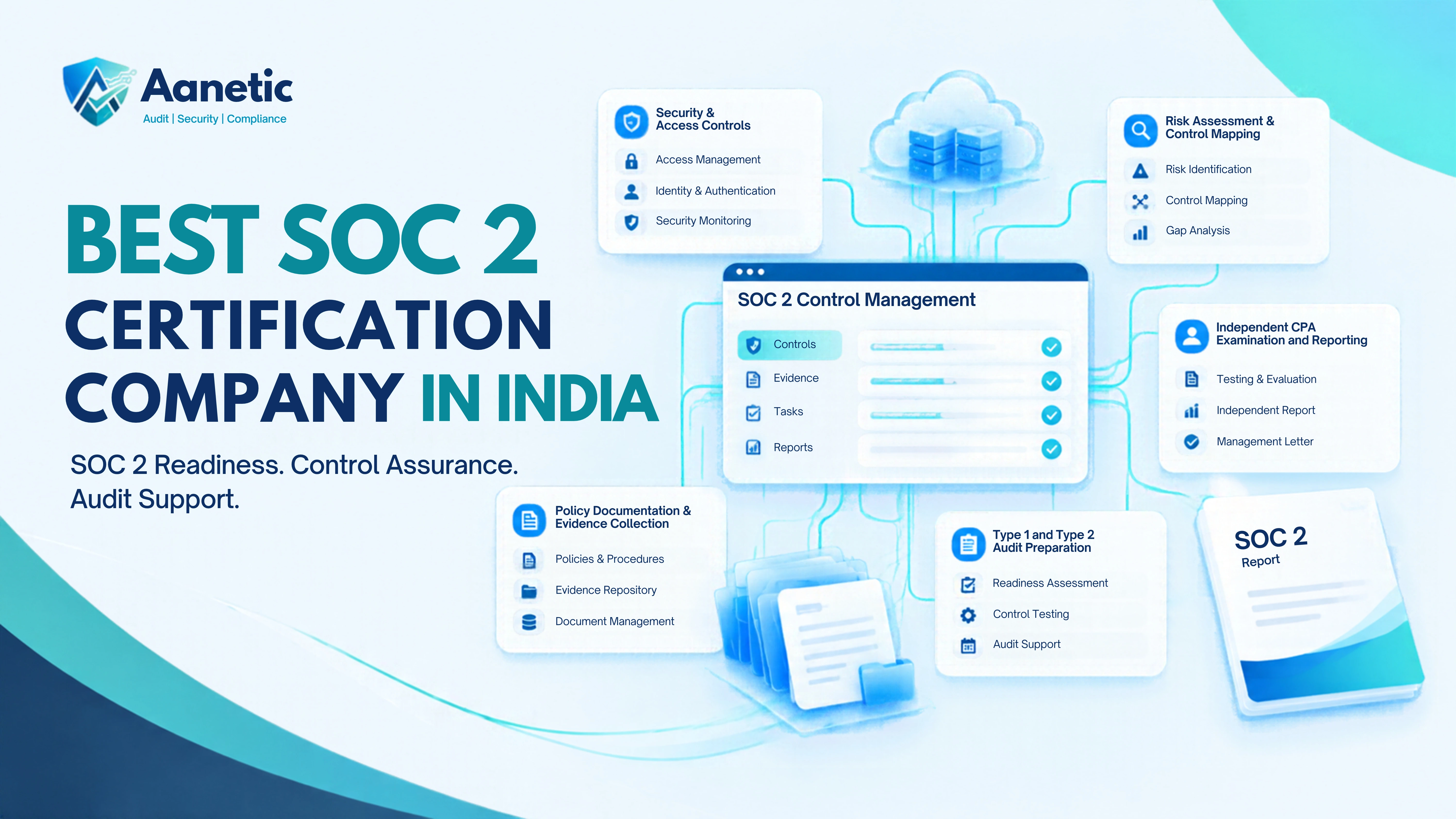
Discover the best SOC 2 compliance companies in India for readiness assessments, gap assessments, Type 1 and Type 2 audit preparation, and compliance support.
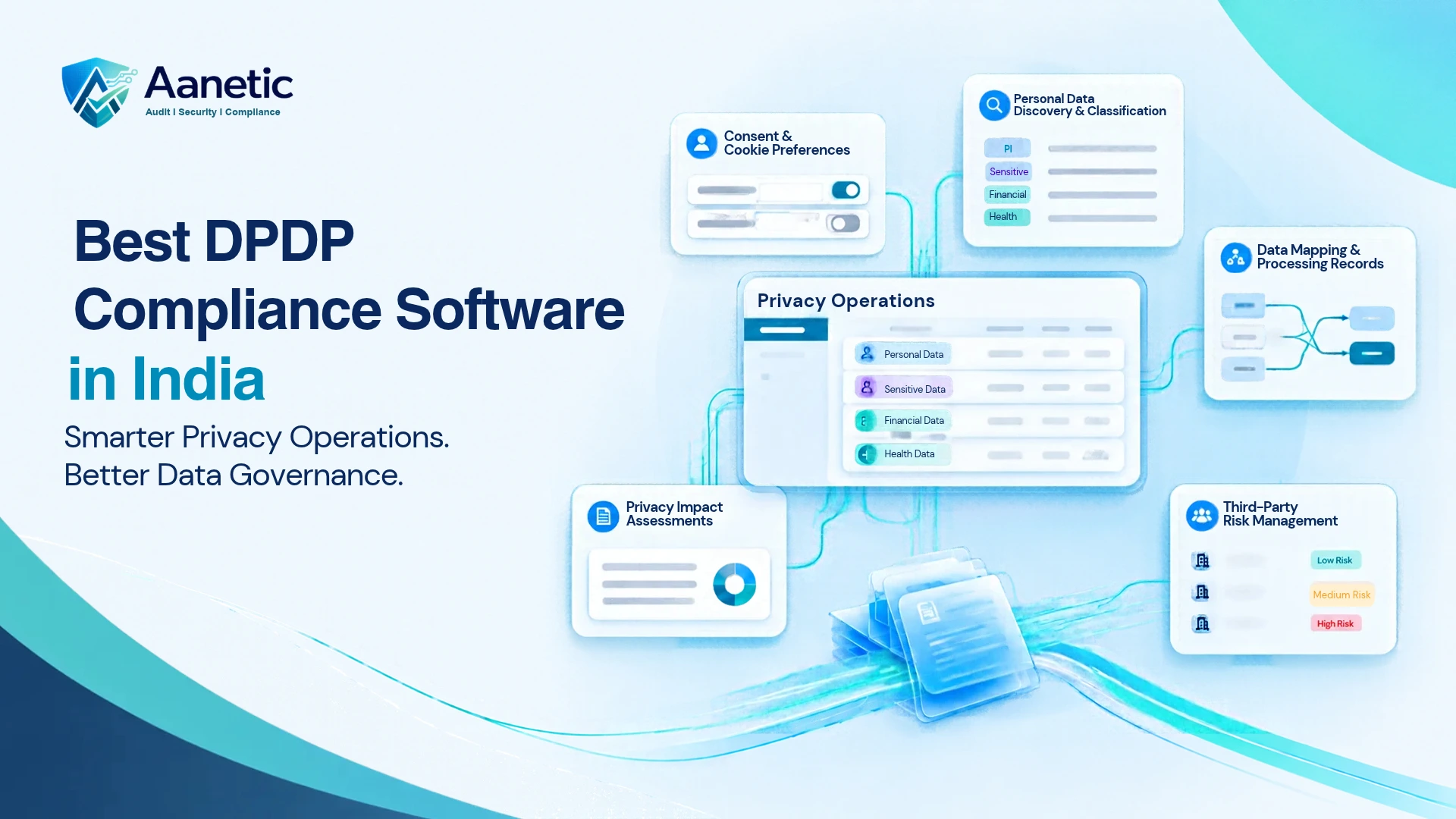
Explore the Best DPDP Compliance Software in India for consent management, PII discovery, data mapping, privacy assessments, and vendor risk management.
Find a SOC 2 Certification Organization in India for 2026. Explore SOC 2 readiness, audit support, Type 1 and Type 2 reports, and compliance services.