28 November 2026
|3:55 pm
|Aanetic Advisory Editorial
Discover how startups can fast-track SOC 2 readiness, reduce compliance costs, prepare audit evidence and build customer trust without cutting corners.
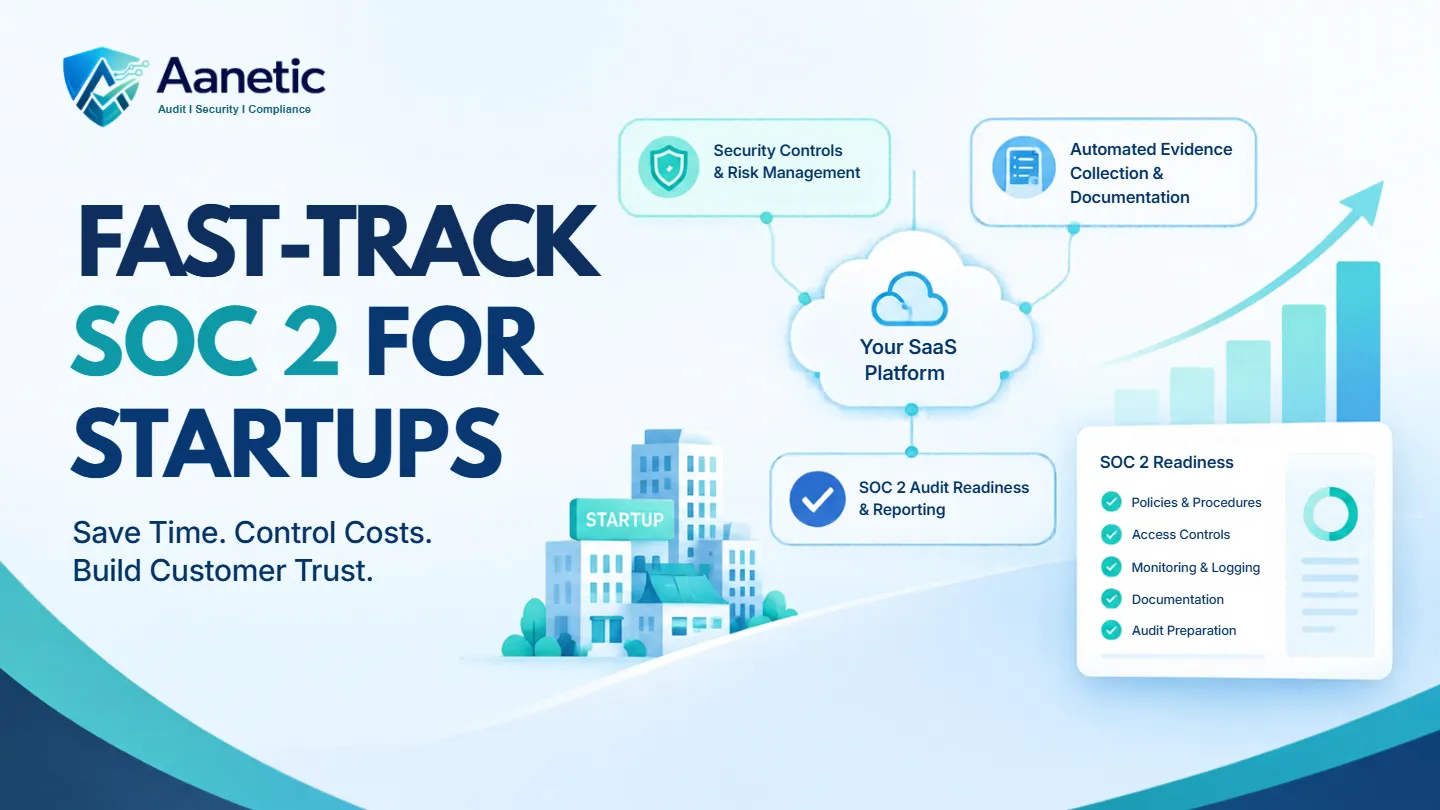
When an enterprise customer asks a startup for a SOC 2 report, the request can create pressure on a small team with limited time and budget. Founders need to maintain product development and customer operations while preparing security controls, policies and audit evidence.
Fast-tracking SOC 2 for startups is about making this preparation more efficient without compromising security or the quality of the examination. A focused scope, an early readiness assessment, clear ownership and organized evidence can reduce unnecessary delays and repeated work.
For Indian SaaS businesses, fintech startups and technology companies serving international customers, a structured approach can make SOC 2 readiness more manageable.
SOC 2 helps service organizations demonstrate how their controls address security and other relevant Trust Services Criteria. Enterprise customers often request a SOC 2 report before approving a technology vendor or sharing sensitive business information.
For startups, the report can support:
Enterprise customer requirements: Responding to security assurance requests during procurement.
Vendor assessments: Providing independent information about relevant security controls.
Customer confidence: Demonstrating that security responsibilities are documented and examined.
Business growth: Building a more structured security programmer as the organization scales.
International opportunities: Supporting conversations with customers that expect recognized assurance reports.
SOC 2 is not a universal legal requirement for every startup. Customer expectations, contractual requirements and business objectives commonly drive it.
It is also important to understand that SOC 2 is an independent attestation report, not a conventional certification. An independent, appropriately licensed CPA firm performs the examination and issues the report.
The most effective way to accelerate SOC 2 preparation is to organize the work before formal examination begins.
Identify the services, applications, infrastructure, teams and processes relevant to the customer-facing system. A clear scope helps avoid unnecessary assessment work and makes responsibilities easier to assign. Do not exclude systems to reduce effort if they are relevant to the service being examined.
Security is the common starting point. Availability, Processing Integrity, Confidentiality and Privacy may also apply depending on the services and customer commitments. Confirm the appropriate criteria based on actual business requirements.
Review existing policies, cloud configurations, access permissions, risk processes and security practices. A SOC 2 readiness assessment identifies gaps before the independent examination and helps the startup priorities its work.
Avoid making the founder responsible for every activity. Assign ownership across engineering, HR, IT, operations and management. Each control should have a responsible person who understands what needs to be implemented and documented.
Address issues that affect the security and reliability of the in-scope system. Examples include excessive access permissions, missing MFA, incomplete change approvals and weak incident response procedures.
Maintain a central repository for policies, access reviews, configuration records, risk assessments, training records and other supporting evidence. Early organization reduces last-minute document collection.
Discuss the proposed scope, examination requirements, evidence expectations and scheduling with the independent CPA firm early. This helps the startup understand what must be ready before fieldwork begins.
Small teams can improve their SOC 2 preparation timeline by using resources they already have effectively.
Review existing documentation: Update relevant security policies and procedures instead of creating duplicate documents. Make sure the content reflects how the startup actually operates.
Use existing cloud security capabilities: Review identity management, logging, encryption, backup and monitoring features already available in the organization's infrastructure.
Automate repetitive evidence tasks: Where supported, integrations can collect configuration records and other evidence from cloud, identity and development systems.
Maintain a single evidence repository: Store approved documents and records in a structured location with appropriate access permissions and version control.
Schedule recurring activities: Plan access reviews, vulnerability reviews, employee training and management approvals in advance.
Coordinate workstreams: Evidence preparation, policy review and technical remediation can progress in parallel when owners and dependencies are clear.
These practices improve coordination. They do not replace the need to implement controls or provide accurate evidence.
Affordable SOC 2 compliance starts with controlling unnecessary work rather than choosing the cheapest possible service.
Keep the scope justified: Include the systems relevant to the service, but avoid adding unrelated environments without a business reason.
Choose criteria carefully: Select the Trust Services Criteria that match customer expectations and the organization's commitments.
Review existing tools: Check whether current cloud, identity and ticketing platforms already support useful security and evidence functions.
Compare platform costs: Evaluate compliance software based on required features, integrations, implementation effort and subscription terms.
Plan testing appropriately: Identify penetration testing and vulnerability assessment needs based on scope, risks and auditor expectations.
Reduce repeated consulting work: Maintain clear documentation and assign internal owners for recurring tasks.
Engage the CPA firm early: Understand examination scope, fees, deliverables and scheduling before committing to a plan.
SOC 2 audit costs for startups vary based on company size, infrastructure, report type, scope, readiness, and the independent CPA firm's fees. Request a written breakdown of consulting, software, remediation and examination costs rather than relying on a single headline price.
Choosing the correct report type early can prevent unnecessary expense and scheduling problems.
SOC 2 Type 1 evaluates whether relevant controls are suitably designed and implemented at a specified point in time. It may suit a startup that needs an initial report and whose prospective customer accepts Type 1.
SOC 2 Type 2 evaluates control design and operating effectiveness over a defined observation period. It is often requested by enterprise customers that want evidence of how controls operated over time.
Before choosing, ask the customer which report it accepts. Type 1 does not replace Type 2 when a customer specifically requires a Type 2 report. A Type 2 observation period cannot be skipped to accelerate delivery.
A structured roadmap helps founders understand the work involved.
Stage 1 – Scope and planning: Define services, systems, stakeholders and applicable criteria.
Stage 2 – Gap assessment: Review existing controls and document missing or incomplete requirements.
Stage 3 – Implementation: Address gaps in policies, access management, risk processes, incident response and other relevant controls.
Stage 4 – Evidence preparation: Organize records and review whether evidence accurately supports control design and implementation.
Stage 5 – Independent examination: Coordinate with the CPA firm for the selected report type and examination.
The schedule depends on existing security maturity, remediation requirements, system complexity and auditor availability. A Type 2 engagement also needs its agreed observation period.
Startups can lose time and money when they:
Select an audit scope without checking customer requirements.
Purchase compliance tools before identifying actual needs.
Use generic policies that do not reflect business operations.
Begin evidence collection only when the auditor requests it.
Treat SOC 2 as a documentation exercise instead of a control programmed.
Confuse readiness consulting with independent examination.
Choose Type 1 when the customer specifically requires Type 2.
Avoiding these mistakes helps keep preparation focused and reduces unnecessary rework.
Aanetic Technology supports organizations preparing for SOC 2 through readiness assessment, control gap identification, documentation and audit preparation.
Relevant support includes:
SOC 2 readiness assessment and gap analysis.
Control mapping and remediation guidance.
Security policy and procedure documentation.
Access control and security process reviews.
Evidence preparation and organization.
Audit readiness and coordination with the independent CPA or attestation firm.
Compliance process improvement and tool-assisted evidence management.
Aanetic's SOC audit readiness services cover SOC 1 and SOC 2 preparation, including support for Type 1 and Type 2. Its SOC 2 compliance tool provides capabilities for Trust Services Criteria mapping, evidence collection, monitoring and audit preparation.
Startups can evaluate these services based on their existing security environment, internal resources, and customer requirements. Aanetic provides readiness and compliance support; the independent CPA firm performs the formal examination and issues the SOC 2 report.
Fast-tracking SOC 2 for startups is achievable through better planning, a focused scope, practical security controls, and organized evidence. Startups can manage unnecessary expenses by reviewing existing resources, prioritising real gaps and choosing the report type their customers require.
Aanetic Technology supports businesses with SOC 2 readiness assessment, control improvement guidance, documentation, evidence preparation and audit coordination.
Planning your SOC 2 journey? Contact Aanetic Technology to discuss a structured readiness approach for your startup.
Yes. Startups can reduce avoidable preparation delays through early scoping, gap assessment, assigned control owners, organized evidence and timely remediation. The examination requirements still need to be met.
Need enterprise guidance on PCI DSS, SOC 2, or RBI compliance frameworks?
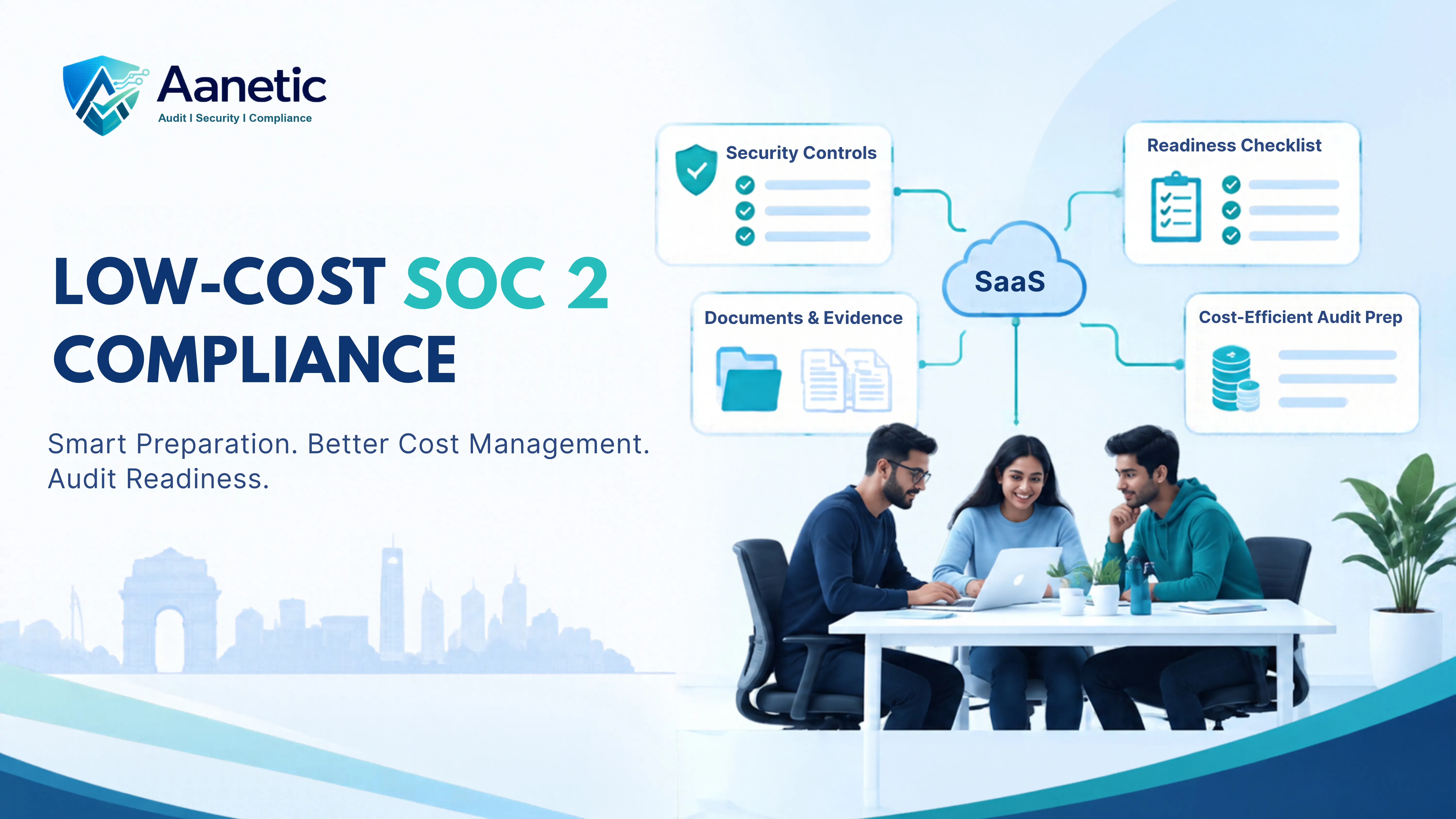
Explore low-cost SOC 2 compliance for startups in Delhi NCR. Learn about readiness, audit costs, preparation, and affordable compliance strategies.
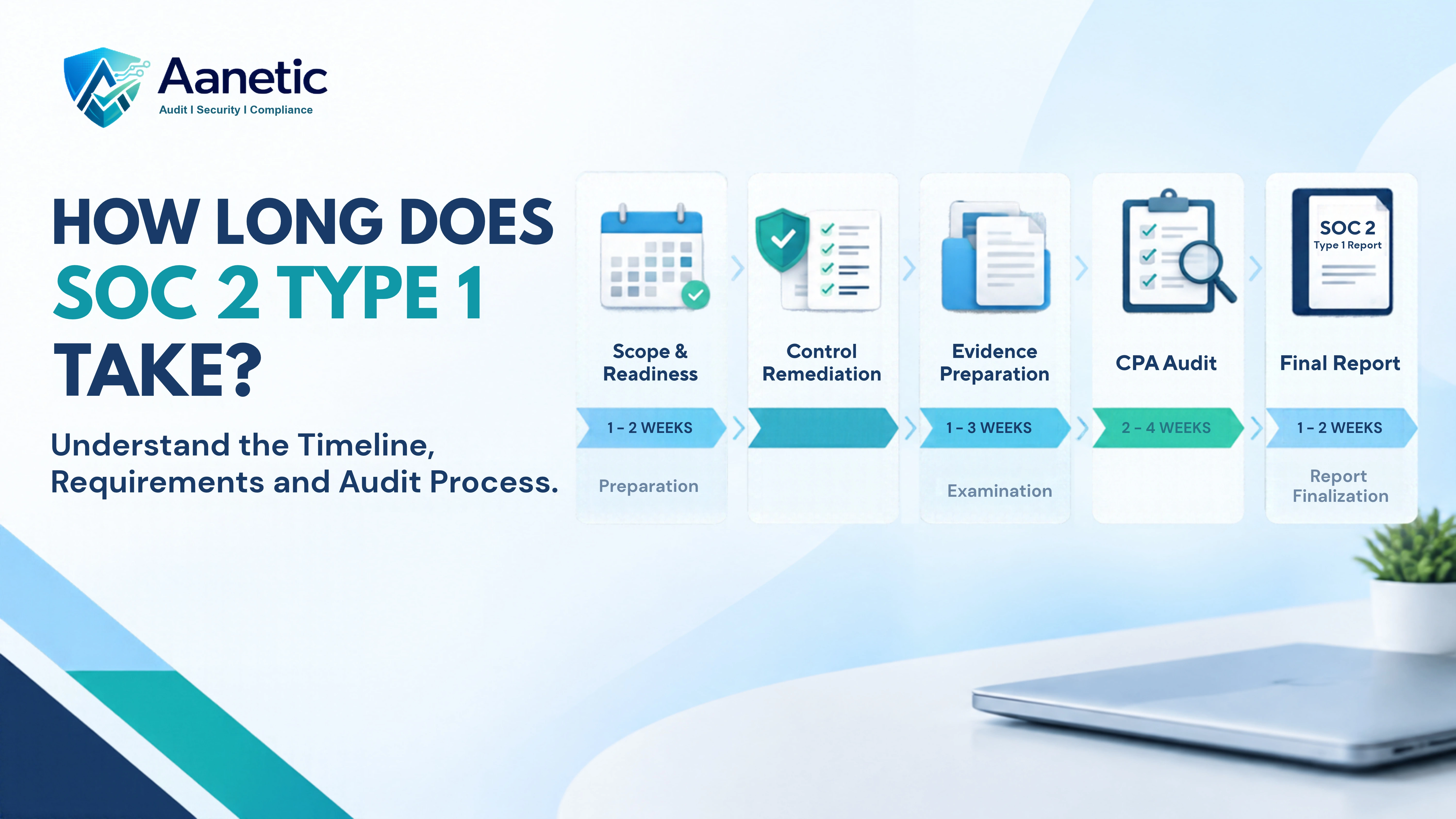
Learn how long SOC 2 Type 1 takes, including readiness timelines, audit requirements, preparation steps, documentation, and report issuance.
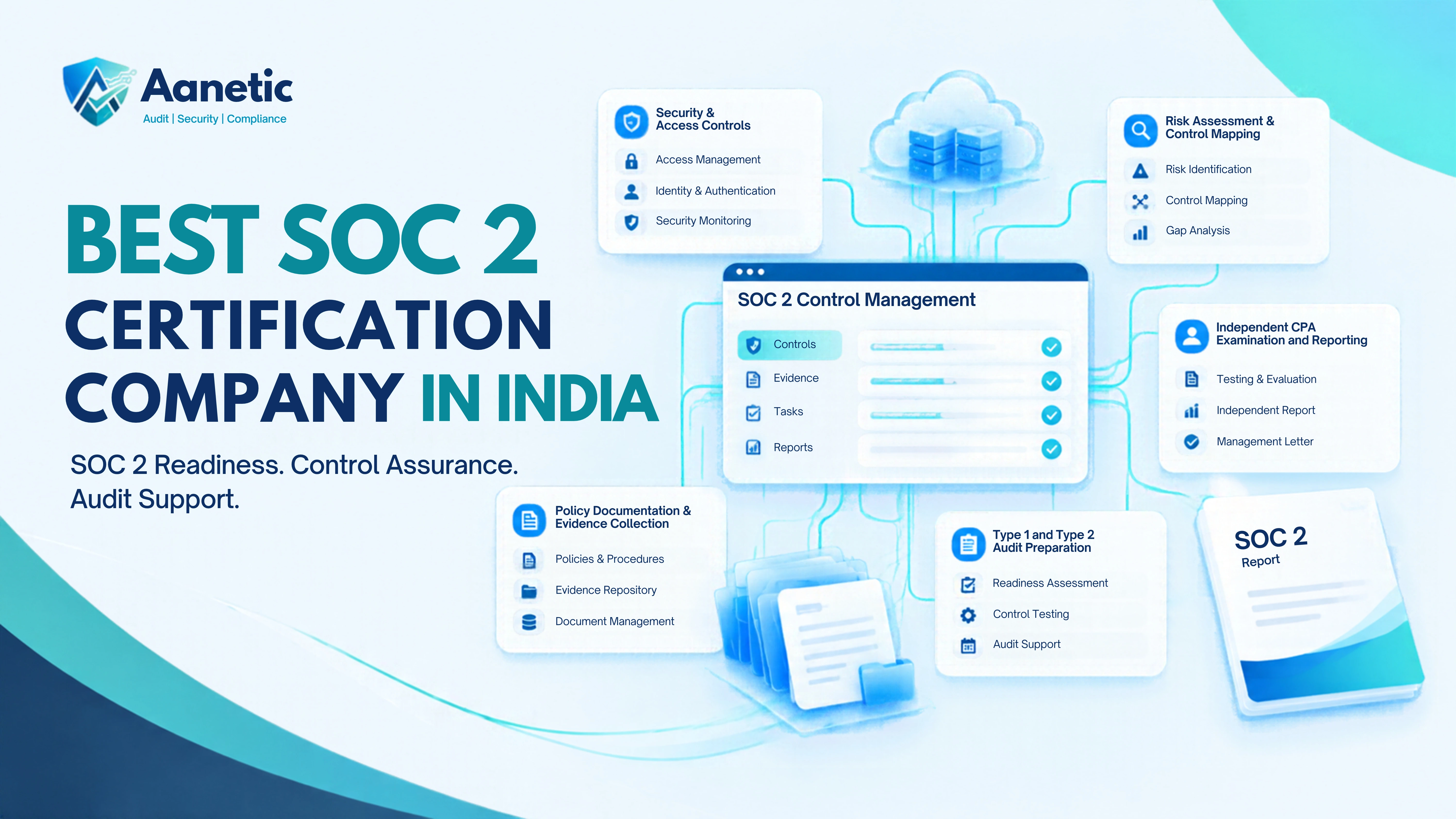
Discover the best SOC 2 compliance companies in India for readiness assessments, gap assessments, Type 1 and Type 2 audit preparation, and compliance support.